<?xml version="1.0" encoding="utf-8"?>
<feed xmlns="http://www.w3.org/2005/Atom">
    <title>Toby K - Performance Design</title>
    <link rel="alternate" type="text/html" href="http://www.tobyk.com.au/" />
    <link rel="self" type="application/atom+xml" href="http://www.tobyk.com.au/atom.xml" />
    <id>tag:www.tobyk.com.au,2009-04-27://1</id>
    <updated>2011-12-15T11:39:19Z</updated>
    <subtitle>Toby Knyvett is a designer, technical director and educator in the entertainment/technical production sector. His work covers theatre, corporate, concert and contemporary performance work. </subtitle>
    <generator uri="http://www.sixapart.com/movabletype/">Movable Type 4.32-en</generator>

<entry>
    <title>Funk It Up About Nothin&apos; - Chicago</title>
    <link rel="alternate" type="text/html" href="http://www.tobyk.com.au/2011/12/funk-it-up-about-nothin---chicago.html" />
    <id>tag:www.tobyk.com.au,2011://1.23</id>

    <published>2011-12-15T10:32:07Z</published>
    <updated>2011-12-15T11:39:19Z</updated>

    <summary> Funk it up about&apos; Nothin is a hip hop adaptation of Shakespeares Much Ado About Nothing. It was created and directed by the Q brothers and originally produced by Chicago Shakespeare Theatre in 2008. Beatrice (Ericka Ratcliff) in the...</summary>
    <author>
        <name>Toby K</name>
        <uri>http://www.tobyk.com.au</uri>
    </author>
    
        <category term="Chicago" scheme="http://www.sixapart.com/ns/types#category" />
    
        <category term="Funk It Up About Nothin" scheme="http://www.sixapart.com/ns/types#category" />
    
    <category term="lighting" label="Lighting" scheme="http://www.sixapart.com/ns/types#tag" />
    
    <content type="html" xml:lang="en" xml:base="http://www.tobyk.com.au/">
        <![CDATA[
<p style="margin-bottom: 0cm"><font face="Arial, sans-serif"><i>Funk
it up about' Nothin</i></font><font face="Arial, sans-serif"> is a
hip hop adaptation of Shakespeares </font><font face="Arial, sans-serif"><i>Much
Ado About Nothing</i></font><font face="Arial, sans-serif">. It was
created and directed by the Q brothers and originally produced by
Chicago Shakespeare Theatre in 2008. </font>
</p>
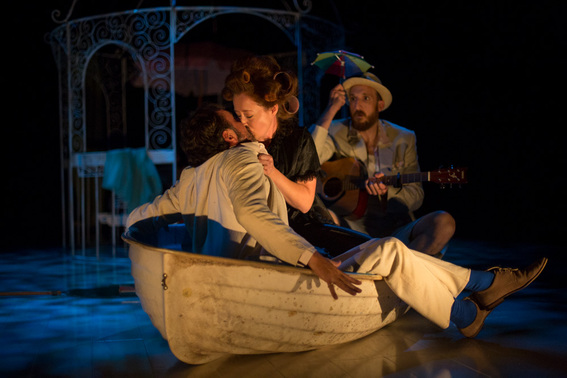
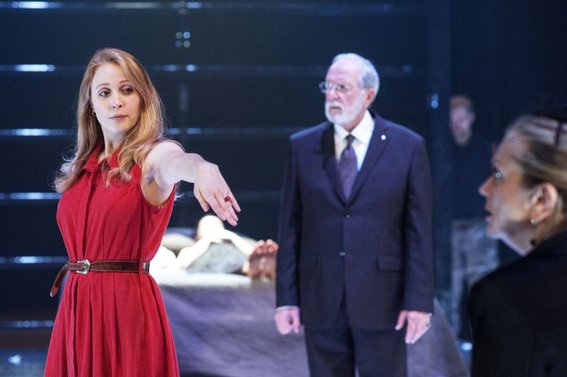
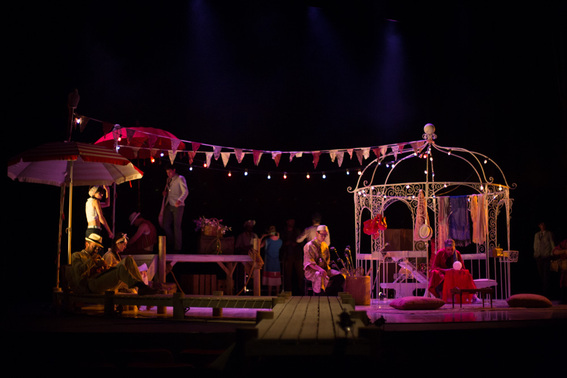
<p style="margin-bottom: 0cm;"><br /></p><p style="margin-bottom: 0cm;"><a href="http://www.tobyk.com.au/assets_c/2011/12/Funk_it_up_20110120_Chicago06-186.html" onclick="window.open('http://www.tobyk.com.au/assets_c/2011/12/Funk_it_up_20110120_Chicago06-186.html','popup','width=800,height=533,scrollbars=no,resizable=no,toolbar=no,directories=no,location=no,menubar=no,status=no,left=0,top=0'); return false"><img src="http://www.tobyk.com.au/assets_c/2011/12/Funk_it_up_20110120_Chicago06-thumb-567x377-186.jpg" alt="Funk_it_up_20110120_Chicago06.jpg" class="mt-image-center" style="text-align: center; display: block; margin: 0 auto 20px;" height="377" width="567" /></a></p><p style="margin-bottom: 0cm;" align="center"><b>Beatrice (Ericka Ratcliff) in the spotlight</b><br /></p><p style="margin-bottom: 0cm"><br />
</p>
<p style="margin-bottom: 0cm"><font face="Arial, sans-serif">In 2011
it came back for a return season in Chicago followed by an east coast
tour of Australia and a season in London. This was a joint effort
between Chicago Shakespeare Theatre (USA), Merrigong Theatre Co (AUS)
and Richard Jordan Productions (UK). I was brought on board to create
a new lighting design as well as manage the Australian tour. </font>
</p>
<p style="margin-bottom: 0cm"><br />
</p>
<p style="margin-bottom: 0cm;"><font face="Arial, sans-serif">Funk it
up is my first international design and I'm proud to say it looked
fantastic.</font><br /></p><p style="margin-bottom: 0cm;"><br /></p><p style="margin-bottom: 0cm;">The people involved:</p><p style="margin-bottom: 0cm;"><br /></p><p style="margin-bottom: 0cm;">Created and Directed by the Q brothers<br /></p><p style="margin-bottom: 0cm;">With:</p><p style="margin-bottom: 0cm;">Jillian Burfette<br /></p><p style="margin-bottom: 0cm;">Jackson Doran<br /></p><p style="margin-bottom: 0cm;">Postell Pringle<br /></p><p style="margin-bottom: 0cm;">GQ</p><p style="margin-bottom: 0cm;">JQ</p><p style="margin-bottom: 0cm;">Ericka Ratcliff</p><p style="margin-bottom: 0cm;">DJ Adrienne Sanchez<br /></p><p style="margin-bottom: 0cm;"><br /></p><p style="margin-bottom: 0cm;">Creative Producer: Rick Boynton&nbsp;</p><p style="margin-bottom: 0cm;">Australian Producer: Simon Hinton</p><p style="margin-bottom: 0cm;">UK Producer: Richard Jordan<br /></p><p style="margin-bottom: 0cm;"><font face="Arial, sans-serif">Set Designer: Brian
Sidney Bembridge</font><br /></p><p style="margin-bottom: 0cm;">Costume Designer: Debbie Baer</p><p style="margin-bottom: 0cm;">US/UK Production Manager: Chris Plevin</p><p style="margin-bottom: 0cm;">AUS Production Manager: Daniel Potter</p><p style="margin-bottom: 0cm;">Company Manager: Daniel Hess</p>
<p style="margin-bottom: 0cm;">Company Manager: Greta Honold<br />
</p>
<p style="margin-bottom: 0cm;">Stage Manager: Angi Adams<br />

</p><p style="margin-bottom: 0cm;">US/UK Audio Engineer: Vince McClelland</p><p style="margin-bottom: 0cm">AUS Audio Engineer: Allan Doyle<br />
</p>
<p style="margin-bottom: 0cm">
</p><br /><p style="margin-bottom: 0cm"><br />
</p>
<p style="margin-bottom: 0cm"><b><font face="Arial, sans-serif">Chicago</font></b></p>
<p style="margin-bottom: 0cm"><br />
</p>
<p style="margin-bottom: 0cm;"><font face="Arial, sans-serif">Chicago
is a beautiful city. If you've just stepped out of the
Australian summer and into the Chicago winter it is also a
ridiculously cold city. If you are planning to head over there you
will probably need to wear pants.</font></p><p style="margin-bottom: 0cm;"><br /></p><p style="margin-bottom: 0cm;"><a href="http://www.tobyk.com.au/assets_c/2011/12/IMG_0778-182.html" onclick="window.open('http://www.tobyk.com.au/assets_c/2011/12/IMG_0778-182.html','popup','width=523,height=700,scrollbars=no,resizable=no,toolbar=no,directories=no,location=no,menubar=no,status=no,left=0,top=0'); return false"><img src="http://www.tobyk.com.au/assets_c/2011/12/IMG_0778-thumb-250x334-182.jpg" alt="IMG_0778.JPG" class="mt-image-center" style="text-align: center; display: block; margin: 0 auto 20px;" height="334" width="250" /></a></p><p style="margin-bottom: 0cm;" align="center"><b>Built in the shell of a carpark. <br /></b></p><p style="margin-bottom: 0cm;" align="center"><b>Can you imagine the outcry in Australia if someone sacrificed <br /></b></p><p style="margin-bottom: 0cm;" align="center"><b><i>parking spaces</i> for a theatre? <br /></b></p><p style="margin-bottom: 0cm"><font face="Arial, sans-serif"><br /></font></p><p style="margin-bottom: 0cm"><font face="Arial, sans-serif">The
theatre itself is located on Navy Pier, which is a huge tourist
destination in the midwest. It sticks out from the centre of the city
into lake Michigan. It's sort of like a cross between Luna park, the Horden pavillion and a
shopping mall. It's great to see a Shakespare theatre positioned as an attraction, rather than some
kind of exclusive 'high art' experience.. It's fitting as Funk it Up itself is a cross cultural
experience. </font>
</p>
<p style="margin-bottom: 0cm"><br />
</p>
<p style="margin-bottom: 0cm"><font face="Arial, sans-serif">I've got
to thank all the people at Chicago Shakes for their amazing
hospitality and warmth. I soon forgot about the cold. It's a
generalisation of course but Americans have a real culture of being
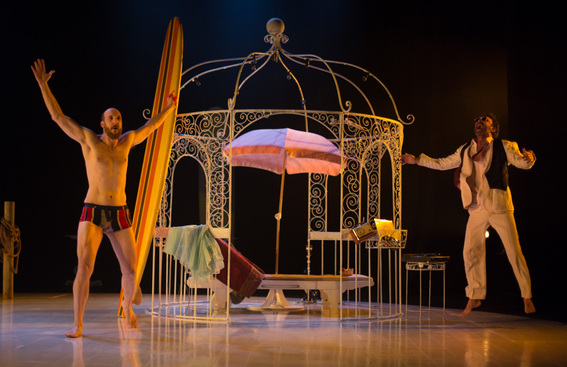
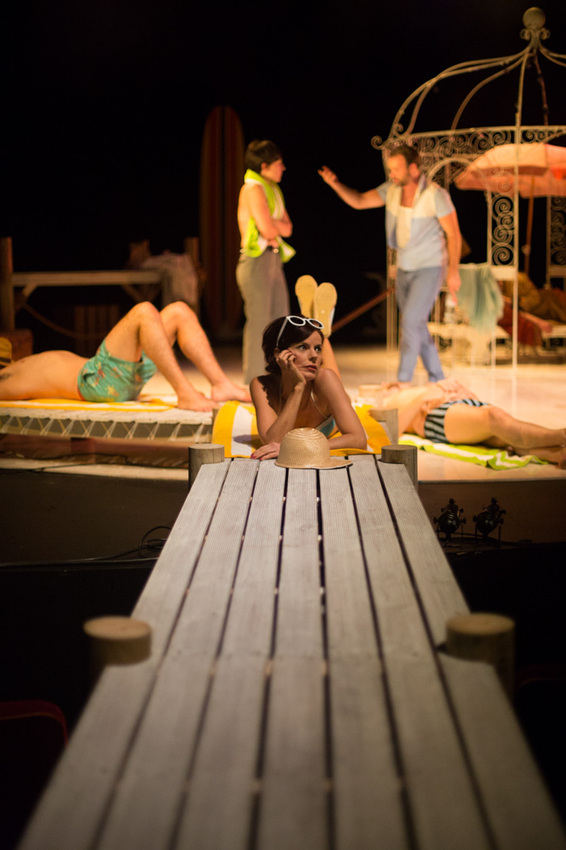
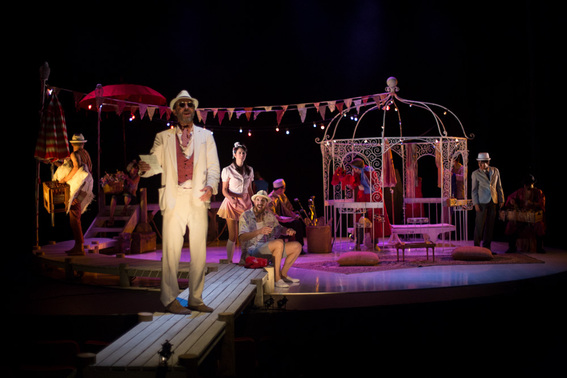
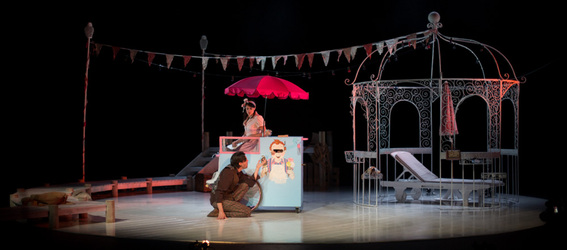
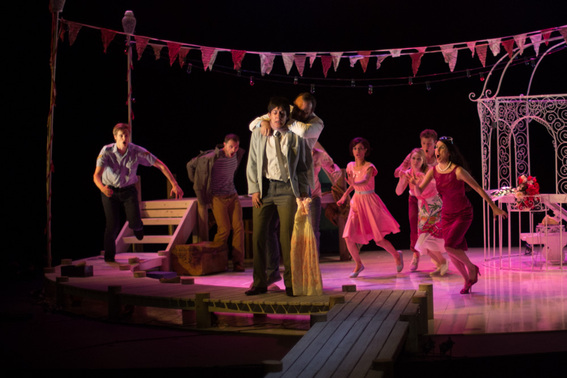
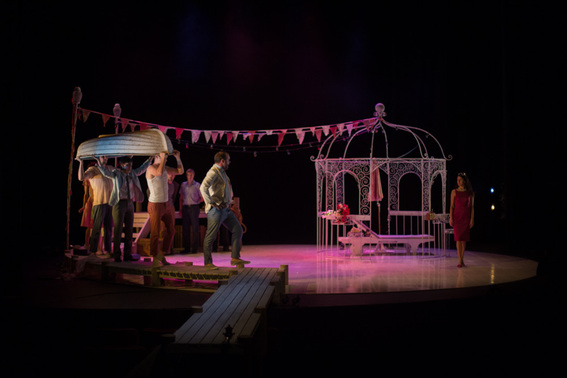
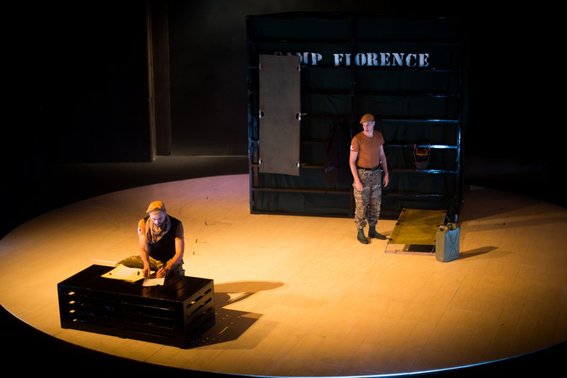
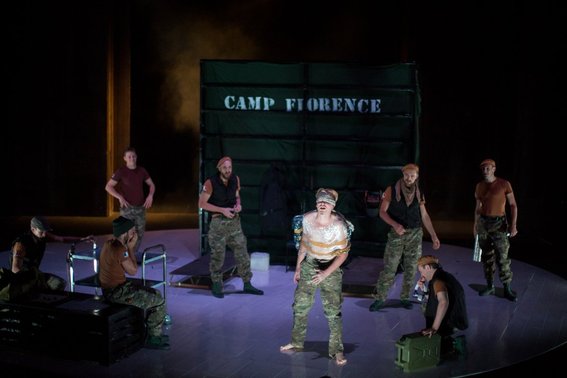
friendly and generous to their guests. Thanks Americans!</font></p><br /><div align="center"><a href="http://www.tobyk.com.au/assets_c/2011/12/Funk_it_up_20110120_Chicago07-189.html" onclick="window.open('http://www.tobyk.com.au/assets_c/2011/12/Funk_it_up_20110120_Chicago07-189.html','popup','width=800,height=533,scrollbars=no,resizable=no,toolbar=no,directories=no,location=no,menubar=no,status=no,left=0,top=0'); return false"><img src="http://www.tobyk.com.au/assets_c/2011/12/Funk_it_up_20110120_Chicago07-thumb-567x377-189.jpg" alt="Funk_it_up_20110120_Chicago07.jpg" class="mt-image-center" style="text-align: center; display: block; margin: 0 auto 20px;" height="377" width="567" /></a></div><div align="center"><b>The Crew, highlighted. Purple Cyc silhouetting the fence. </b><br /></div><br /><p style="margin-bottom: 0cm;">The brief for the lighting design was <font face="Arial, sans-serif">Old School. Old school for me means a couple of things: Bold colour and thick beams
in the air. I spoke to Daniel Potter (Merrigongs Production Manager) about getting hold of some ACLs&nbsp; (Sort of like narrow beam parcans) as well as some ultraviolet fixtures. I
made some other decisions at this point: The set was quite heavily
textured already and so I decided to go without gobos. We had some
other effects up our sleeve including festoons, lightboxes within the
set, a mirrorball, a strobe and a particular light that became known
as 'the discotoy' so I didn't need gobos as a look. Lastly we would
have a cyclorama. Despite it reducing the room the actors had
backstage we decided on using groundrows as well as
flown cyc units so we could do split colour on the cyc from the
top and bottom. </font><br /></p><p style="margin-bottom: 0cm;"><br /></p><p style="margin-bottom: 0cm"><a href="http://www.tobyk.com.au/assets_c/2011/12/Funk_it_up_20110120_Chicago01-192.html" onclick="window.open('http://www.tobyk.com.au/assets_c/2011/12/Funk_it_up_20110120_Chicago01-192.html','popup','width=800,height=533,scrollbars=no,resizable=no,toolbar=no,directories=no,location=no,menubar=no,status=no,left=0,top=0'); return false"><img src="http://www.tobyk.com.au/assets_c/2011/12/Funk_it_up_20110120_Chicago01-thumb-567x377-192.jpg" alt="Funk_it_up_20110120_Chicago01.jpg" class="mt-image-center" style="text-align: center; display: block; margin: 0 auto 20px;" height="377" width="567" /></a>
</p>
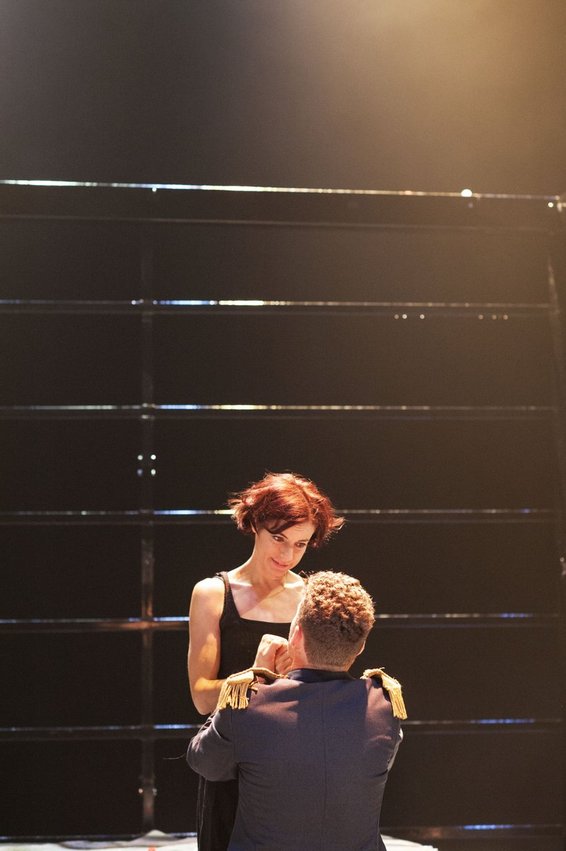
<p style="margin-bottom: 0cm;" align="center"><b>Don Pedro (Postell Pringle) and Claudio (Jackson Doran)</b><br /></p><p style="margin-bottom: 0cm;"><br /></p><p style="margin-bottom: 0cm"><br />
</p>
<p style="margin-bottom: 0cm"><font face="Arial, sans-serif">Originally
I designed a cool/warm 10 way FOH wash. 5 along the bottom and 5
along the top. Cool was Lee 202 and warm was Rosco 02. The set made it
difficult to use booms but I'm a sucker for sidelight so I put in
some highsides coming off the grid with the same warm but a stronger
cool, R02 and L201 respectively. These would also be useful for
getting into some of the doorway shapes. Overhead I designed a 6 way
top wash in a fairly dramatic warm and cool. L134 and L200.  These
would also be used for isolated moments. </font>
</p>
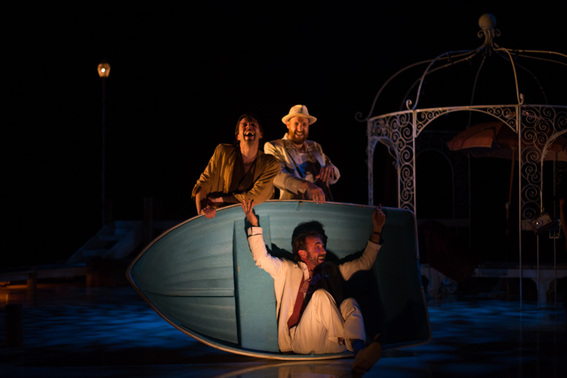
<p style="margin-bottom: 0cm;"><br /></p><p style="margin-bottom: 0cm;"><a href="http://www.tobyk.com.au/assets_c/2011/12/Funk_it_up_20110120_Chicago02-195.html" onclick="window.open('http://www.tobyk.com.au/assets_c/2011/12/Funk_it_up_20110120_Chicago02-195.html','popup','width=800,height=533,scrollbars=no,resizable=no,toolbar=no,directories=no,location=no,menubar=no,status=no,left=0,top=0'); return false"><img src="http://www.tobyk.com.au/assets_c/2011/12/Funk_it_up_20110120_Chicago02-thumb-567x377-195.jpg" alt="Funk_it_up_20110120_Chicago02.jpg" class="mt-image-center" style="text-align: center; display: block; margin: 0 auto 20px;" height="377" width="567" /></a></p><p style="margin-bottom: 0cm;" align="center"><b>Big Jon (Ericka Ratcliffe) and Little Boi (Jillian Burfette) </b><br /></p><p style="margin-bottom: 0cm"><br />
</p>
<p style="margin-bottom: 0cm"><font face="Arial, sans-serif">The next
element was a wash for the set. This was to be an amber and a purple,
L205 and L180. The L205 shot was from profiles (more typically known
as Lekos or ellipsoidals in the US) and shuttered down to the shape
of the set. This way I could add a bit of warmth as required areas without spoiling the tone of the set. The
L180 shot was done with a parcan from as high an angle as possible so
it would cast some shadows. These were used for kind of hyperreal day
and night looks. </font>
</p>
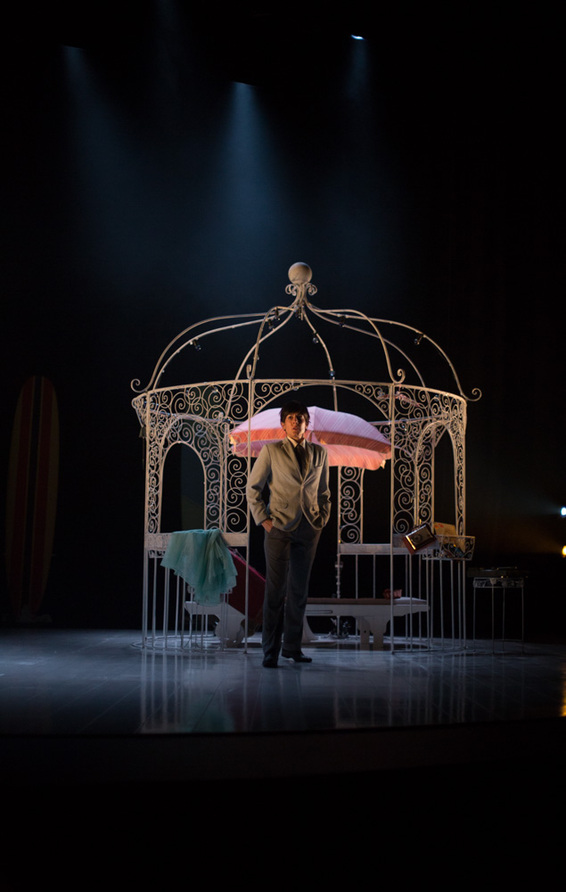
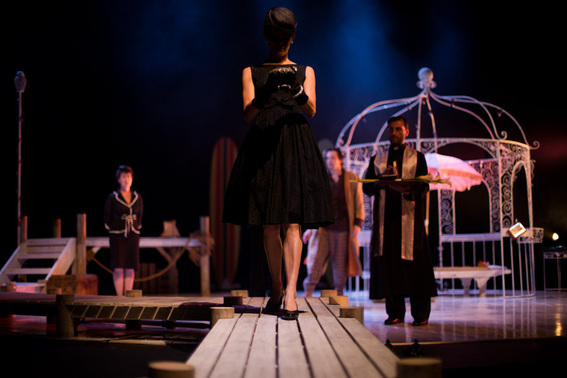
<p style="margin-bottom: 0cm;"><br /></p><p style="margin-bottom: 0cm;"><a href="http://www.tobyk.com.au/assets_c/2011/12/Funk_it_up_20110120_Chicago03-198.html" onclick="window.open('http://www.tobyk.com.au/assets_c/2011/12/Funk_it_up_20110120_Chicago03-198.html','popup','width=466,height=700,scrollbars=no,resizable=no,toolbar=no,directories=no,location=no,menubar=no,status=no,left=0,top=0'); return false"><img src="http://www.tobyk.com.au/assets_c/2011/12/Funk_it_up_20110120_Chicago03-thumb-567x851-198.jpg" alt="Funk_it_up_20110120_Chicago03.jpg" class="mt-image-center" style="text-align: center; display: block; margin: 0 auto 20px;" height="851" width="567" /></a></p><p style="margin-bottom: 0cm;" align="center"><b>The Judge (Jackson Doran). You do remember there's a judge in Much Ado right? </b><br /></p><p style="margin-bottom: 0cm"><br />
</p>
<p style="margin-bottom: 0cm"><font face="Arial, sans-serif">Backlight
was where it started to get more fun. Six profiles shot back through
and served two purposes - isolated backlight for some of the
musical moments, but also their own fan type beam look when all on
together. The colour was 2 cuts of L704 in the one frame, a
combination I discovered makes a kind of electric purple, although
overall intensity isn't ideal.</font>
</p>
<p style="margin-bottom: 0cm;"><br /></p><p style="margin-bottom: 0cm;"><a href="http://www.tobyk.com.au/assets_c/2011/12/Funk_it_up_20110120_Chicago05-201.html" onclick="window.open('http://www.tobyk.com.au/assets_c/2011/12/Funk_it_up_20110120_Chicago05-201.html','popup','width=467,height=700,scrollbars=no,resizable=no,toolbar=no,directories=no,location=no,menubar=no,status=no,left=0,top=0'); return false"><img src="http://www.tobyk.com.au/assets_c/2011/12/Funk_it_up_20110120_Chicago05-thumb-567x849-201.jpg" alt="Funk_it_up_20110120_Chicago05.jpg" class="mt-image-center" style="text-align: center; display: block; margin: 0 auto 20px;" height="849" width="567" /></a></p><p style="margin-bottom: 0cm;" align="center"><b>Hero (Jillian Burfette)</b><br /></p><p style="margin-bottom: 0cm"><br />
</p>
<p style="margin-bottom: 0cm"><font face="Arial, sans-serif">The cyc
lighting was both groundrows and hanging cycs as detailed above.
Colours were R22 (nearly an Orange, not quite) R58 ("Deep
Lavender". Looks to me like purple plus a bit of sky blue) and R80
(Primary blue, relatively dark). Individually each was fairly
dramatic, combined together I could achieve more natural looks,
evoking sunsets and similar in a hyperreal fashion.</font></p>
<p style="margin-bottom: 0cm;"><br /></p><p style="margin-bottom: 0cm;"><a href="http://www.tobyk.com.au/assets_c/2011/12/Funk_it_up_20110120_Chicago04-204.html" onclick="window.open('http://www.tobyk.com.au/assets_c/2011/12/Funk_it_up_20110120_Chicago04-204.html','popup','width=467,height=700,scrollbars=no,resizable=no,toolbar=no,directories=no,location=no,menubar=no,status=no,left=0,top=0'); return false"><img src="http://www.tobyk.com.au/assets_c/2011/12/Funk_it_up_20110120_Chicago04-thumb-567x849-204.jpg" alt="Funk_it_up_20110120_Chicago04.jpg" class="mt-image-center" style="text-align: center; display: block; margin: 0 auto 20px;" height="849" width="567" /></a></p><p style="margin-bottom: 0cm;" align="center"><b>Leonato (GQ)<br /></b></p><p style="margin-bottom: 0cm"><br />
</p>
<p style="margin-bottom: 0cm"><font face="Arial, sans-serif">The main
set electrics was ropelight behind perspex panels. It was coiled onto
a timber pannel which was then fixed a set distance from the back of
the perspex. If it was too close it would be patchy, too far and not
bright enough. In Chicago we used older style incandescent ropelight.
It gave a warmer look but wasn't quite bright enough. We ended up
using aluminium foil as a reflector behind to get the most out of it.
Each ropelight/perspex unit was walled in with aluminium foil to
prevent spill reflected from the back of the perspex becoming an
issue. </font>
</p>
<p style="margin-bottom: 0cm;"><br /></p><p style="margin-bottom: 0cm;"><a href="http://www.tobyk.com.au/assets_c/2011/12/Funk_it_up_20110117_Chicago08-207.html" onclick="window.open('http://www.tobyk.com.au/assets_c/2011/12/Funk_it_up_20110117_Chicago08-207.html','popup','width=800,height=598,scrollbars=no,resizable=no,toolbar=no,directories=no,location=no,menubar=no,status=no,left=0,top=0'); return false"><img src="http://www.tobyk.com.au/assets_c/2011/12/Funk_it_up_20110117_Chicago08-thumb-567x423-207.jpg" alt="Funk_it_up_20110117_Chicago08.JPG" class="mt-image-center" style="text-align: center; display: block; margin: 0 auto 20px;" height="423" width="567" /></a></p><p style="margin-bottom: 0cm;" align="center"><b>The crew rigging under worklights. You can see the set came all the way to the grid. </b><br /></p><p style="margin-bottom: 0cm"><br />
</p>
<p style="margin-bottom: 0cm"><font face="Arial, sans-serif">The
other significant set electrics was a string of festoons above. In
America they don't have the word 'festoon' and (in Chicago at least)
they called them Italian lights. It was actually three strings of
light bulbs woven together. Brian chose three different bulbs and
specified that of the three circuits would be coloured. A great effect was
dimming down the cyc a little and bringing up the clear festoons to
about 20%. If you did this over 5 or 6 minutes it would give the
impression of nightfall. What I didn't expect was how good the
coloured bulbs would look and I ended up that channel on it's own as part of several looks.&nbsp; </font>
</p>
<p style="margin-bottom: 0cm;"><br /></p><div align="center"><a href="http://www.tobyk.com.au/assets_c/2011/12/IMG_0835-210.html" onclick="window.open('http://www.tobyk.com.au/assets_c/2011/12/IMG_0835-210.html','popup','width=800,height=598,scrollbars=no,resizable=no,toolbar=no,directories=no,location=no,menubar=no,status=no,left=0,top=0'); return false"><img src="http://www.tobyk.com.au/assets_c/2011/12/IMG_0835-thumb-250x186-210.jpg" alt="IMG_0835.JPG" class="mt-image-center" style="text-align: center; display: block; margin: 0 auto 20px;" height="186" width="250" /></a></div><p style="margin-bottom: 0cm;"></p><p style="margin-bottom: 0cm;" align="center"><b>View from the foyer after our first tech rehearsal</b><br /></p><p style="margin-bottom: 0cm;"><br /></p><p style="margin-bottom: 0cm;">In the next article I'll talk about the Australian leg of the tour. <br /></p><p style="margin-bottom: 0cm;"><br /></p><p style="margin-bottom: 0cm;"><br /></p><p style="margin-bottom: 0cm;"><br /></p><br /><p style="margin-bottom: 0cm;"><br /></p><p style="margin-bottom: 0cm;"><br /></p><p style="margin-bottom: 0cm;"><br /></p><p style="margin-bottom: 0cm;"><br /></p><p style="margin-bottom: 0cm"><br />
</p><br /><div><br /></div>]]>
        
    </content>
</entry>

<entry>
    <title>What is Feedback? </title>
    <link rel="alternate" type="text/html" href="http://www.tobyk.com.au/2010/10/what-is-feedback.html" />
    <id>tag:www.tobyk.com.au,2010://1.20</id>

    <published>2010-10-04T02:13:46Z</published>
    <updated>2010-10-21T11:23:55Z</updated>

    <summary>Feedback is a hybrid live work, conceived be me! The technology involved is an infrared camera, a projector and a sound system. The camera tracks the movements of a performer and feeds this data into a computer. The computer uses...</summary>
    <author>
        <name>Toby K</name>
        <uri>http://www.tobyk.com.au</uri>
    </author>
    
        <category term="Feedback" scheme="http://www.sixapart.com/ns/types#category" />
    
    <category term="dance" label="Dance" scheme="http://www.sixapart.com/ns/types#tag" />
    <category term="digitalthing" label="Digital Thing" scheme="http://www.sixapart.com/ns/types#tag" />
    <category term="interaction" label="Interaction" scheme="http://www.sixapart.com/ns/types#tag" />
    <category term="projection" label="Projection" scheme="http://www.sixapart.com/ns/types#tag" />
    
    <content type="html" xml:lang="en" xml:base="http://www.tobyk.com.au/">
        <![CDATA[<p><br /><a href="http://www.tobyk.com.au/assets_c/2010/10/Feedback1JM10_063-113.html" onclick="window.open('http://www.tobyk.com.au/assets_c/2010/10/Feedback1JM10_063-113.html','popup','width=2316,height=3192,scrollbars=no,resizable=no,toolbar=no,directories=no,location=no,menubar=no,status=no,left=0,top=0'); return false"><img src="http://www.tobyk.com.au/assets_c/2010/10/Feedback1JM10_063-thumb-567x781-113.jpg" width="567" height="781" alt="Feedback1JM10_063.JPG" class="mt-image-center" style="text-align: center; display: block; margin: 0 auto 20px;" /></a><br /><em>Feedback</em> is a hybrid live work, conceived be me! <br /> <br /> The technology involved is an infrared camera, a projector and a sound system. The camera tracks the movements of a performer and feeds this data into a computer. The computer uses the data to generate vision and sound which is sent to the projector and speakers accordingly.<br /><br />The concept is that performers work within an improvisational framework, reacting to the output of the digital system in generating the next frame of input. The relationships between performer and technology are explored in both literal and abstract ways. For example a performer using a Wii remote to record the movement of their shadow, and then play it back, rewind it etc.... Or a digital tree growing, branch locations, sizes and angles (its 'virtual DNA') set via the performers movements.Over the course of the scene new behaviours emerge. <br /><br />I developed <em>feedback</em> because I was dissatisfied with the role of
light in traditional dramatic works. Lighting is usually the last element to be introduced into the production and for that reason feels somewhat compromised as opposed to the 'purity' of the dramatic text which is maintained from day one of rehearsal. So in <em>feedback</em> I aim to create a production
that uses light, vision and interaction as a starting point rather
than text or body. Aesthetically I aim for it to draw on lighting transitions as inspiration - transformative moments in a performance where the audience accepts that night has become day in an instant or that a celebration has become a funeral. <br /><br /><em>Feedback</em> is in its very early stages. It has just completed an initial development and work-in-progress showing as part of the Merrigong Theratre Development Program. I've embedded a video of excerpts from this development:<br /><br /><br /><p ALIGN=center><iframe src="http://player.vimeo.com/video/15475259" width="600" height="338" frameborder="0"></iframe></p><br /><a href="http://www.tobyk.com.au/2010/10/feedback-sep-2010-production-report.html">Read the full September 2010 production report.</a> <br /><br />I'd like to offer a big thanks to everyone who participated in this development and made it possible: <br /><br />Composers: Wendy Suiter, Houston Dunleavy and Joshua Craig<br /><br />Movers: Jessica Millman, Solomon Thomas, Malcolm Whittaker<br /><br />Special thanks: Everyone at <a href="http://www.merrigong.com.au/">Merrigong Theatre Company</a> including Anne-Louise Rentell, Simon Hinton, Daniel Potter and Allan Doyle. Sarah Miller and Alistair Davies from the University of Wollongong. John Knyvett of Full Screen Ahead. <br /><br /><br />I'm currently in the process of applying for funding to take Feedback to the next stage in 2011. I'm also planning to change my style of blogging to smaller, more frequent updates rather than big posts at the end of projects so keep an eye on this page for progress. <br /><br /> <br /> </p>
]]>
        

    </content>
</entry>

<entry>
    <title>Feedback Sep 2010 Production Report</title>
    <link rel="alternate" type="text/html" href="http://www.tobyk.com.au/2010/10/feedback-sep-2010-production-report.html" />
    <id>tag:www.tobyk.com.au,2010://1.21</id>

    <published>2010-10-03T09:29:10Z</published>
    <updated>2010-10-26T10:52:01Z</updated>

    <summary> Jessica Millman in scene 1 The following words and images document the September 2010 development of feedback and associated work-in-progress showings. Much of this document is written in present tense as feedback is still under development and will undergo...</summary>
    <author>
        <name>Toby K</name>
        <uri>http://www.tobyk.com.au</uri>
    </author>
    
        <category term="Feedback" scheme="http://www.sixapart.com/ns/types#category" />
    
        <category term="Sep 2010 Production Report" scheme="http://www.sixapart.com/ns/types#category" />
    
    <category term="dance" label="Dance" scheme="http://www.sixapart.com/ns/types#tag" />
    <category term="digitalthing" label="Digital Thing" scheme="http://www.sixapart.com/ns/types#tag" />
    <category term="interaction" label="Interaction" scheme="http://www.sixapart.com/ns/types#tag" />
    <category term="projection" label="Projection" scheme="http://www.sixapart.com/ns/types#tag" />
    
    <content type="html" xml:lang="en" xml:base="http://www.tobyk.com.au/">
        <![CDATA[<a href="http://www.tobyk.com.au/assets_c/2010/10/FeedbackBG210_JM-38-155.html"><br /></a> <div><div align="center"><a href="http://www.tobyk.com.au/assets_c/2010/10/FeedbackBG210_JM-21-116.html"><img src="http://www.tobyk.com.au/assets_c/2010/10/FeedbackBG210_JM-21-thumb-567x444-116.jpg" alt="FeedbackBG210_JM-21.jpg" class="mt-image-center" style="text-align: center; display: block; margin: 0pt auto 20px;" height="444" width="567" /></a><i>Jessica Millman in scene 1</i><br /><br /><br /></div>
<p style="margin-bottom: 0cm;"><font face="Arial, sans-serif">The
following words and images document the September 2010 development of<i>
feedback</i> and associated work-in-progress showings. Much of this
document is written in present tense as<i> feedback</i> is still
under development and will undergo significant change before it
reaches a final incarnation. </font>
</p>
<p style="margin-bottom: 0cm;"><br />
</p>
<p style="margin-bottom: 0cm;"><font face="Arial, sans-serif">I
originally created <i>feedback</i> as an extension of my lighting
design practice. It has evolved into something much more due to the
contributions of my collaborators:</font></p>
<p style="margin-bottom: 0cm;"><br />
</p>
<p style="margin-bottom: 0cm;"><font face="Arial, sans-serif">Composers:
Wendy Suiter, Houston Dunleavy and Joshua Craig<br /><br />Movers:
Jessica Millman, Solomon Thomas, Malcolm Whittaker </font>
</p>
<p style="margin-bottom: 0cm;"><br />
</p>
<p style="margin-bottom: 0cm;"><font face="Arial, sans-serif">This
documentation is intended to, amongst other things, provide practical
insights that might be of use to practitioners attempting similar
projects or who would like to know more about working with the
technology.</font></p>
<p style="margin-bottom: 0cm;"><br />
</p>
<br /><br /><div align="center"><a href="http://www.tobyk.com.au/assets_c/2010/10/FeedbackBG210_JM-80-119.html"><img src="http://www.tobyk.com.au/assets_c/2010/10/FeedbackBG210_JM-80-thumb-567x378-119.jpg" alt="FeedbackBG210_JM-80.jpg" class="mt-image-center" style="text-align: center; display: block; margin: 0pt auto 20px;" height="378" width="567" /></a><i>Solomon Thomas in Scene 2</i><br /><br /><div align="left">

<p style="margin-bottom: 0cm;"><b><font face="Arial, sans-serif">What is
<i>feedback</i> physically?</font></b></p>
<p style="margin-bottom: 0cm;"><br />
</p>
<p style="margin-bottom: 0cm;"><font face="Arial, sans-serif">For the
2010 development <i>feedback</i> consists of a stage approx 5m x 3m,
backed by flats approx 5m x 2.4m. Stage and flats are painted black.</font></p>
<p style="margin-bottom: 0cm;"><br />
</p>
<p style="margin-bottom: 0cm;"><font face="Arial, sans-serif">A
projector is located in the centre of the seating bank. The projector
lens height is roughly equivalent to performer head height onstage.
The projector beam is focused so that its bottom edge is aligned with
the front edge of the stage, and its width is the same width as the
flats. It covers the entire movement area. The projector is high
quality but otherwise has no special features.</font></p>
<p style="margin-bottom: 0cm;"><br />
</p>
<p style="margin-bottom: 0cm;"><font face="Arial, sans-serif">A camera
is fixed on top of the projector. It is focused so that its view is
precisely aligned with the projector beam. The camera sees exactly
what the projector projects, from very nearly the same position. <a href="http://peauproductions.com/ps3.html">The
camera</a> is a USB camera selected for it's extremely fast image
processing - there is no lag between real life and the image on the
computer.</font></p>
<p style="margin-bottom: 0cm;"><br />
</p>
<p style="margin-bottom: 0cm;"><font face="Arial, sans-serif">Both
camera and projector are connected to a PC laptop. The laptop is
running a custom program using <a href="http://vvvv.org/">vvvv</a>. There is a second laptop
networked to the first and connected to a sound system. </font>
</p>
<p style="margin-bottom: 0cm;"><br />
</p>
<p style="margin-bottom: 0cm;"><font face="Arial, sans-serif">On
either side of the stage theatre lights are mounted on floor stands.
Each is coloured with Lee high temperature colour filter #181 - Congo
Blue. Congo blue lets very little visible light through, less than
1%. With power to these lights also reduced (to around 40%) the stage
appears nearly totally dark. Each light is of the type known as a
profile, and is focused so that its beam is shuttered off the flats
and the floor. They do hit the opposite wall but with the dark colour
and low power this is not a distraction. The lights are positioned so
the total effect is that they illuminate the volume of air in front
of the flats, but not the flats or floor.</font></p>
<p style="margin-bottom: 0cm;"><br />
</p>
<p style="margin-bottom: 0cm;"><font face="Arial, sans-serif">The
final physical element is a light filter in front of the camera. This
filter is made out of several layers of the #181 colour material.</font></p>
<p style="margin-bottom: 0cm;"><br />
</p>
<p style="margin-bottom: 0cm;"><font face="Arial, sans-serif">The #181
filter blocks most visible light, but passes infrared light through.
The theatre lights, based on filament technology emit infrared light,
along with much heat and visible light. The camera has been modified
so it can see both visible and infrared light, but the filter in
front of it only allows infrared light through. The projector
however, with it's complicated lens system and discharge lamp, emits
virtually no infrared light. In this way the projector light doesn't
contaminate the infrared image and the theatre light doesn't
contaminate the visible image.</font></p>
<p style="margin-bottom: 0cm;"><br />
</p>
<p style="margin-bottom: 0cm;"><font face="Arial, sans-serif">When a
person walks onstage they are illuminated with the infrared light.
Because the flats and floor are not illuminated the person appears as
white on a black background to the camera, isolating their position
and shape onstage. The projector light, as it is only in the visible
spectrum, is not seen by the camera and does not interfere with the
camera taking an image of the person onstage. </font>
</p>
<p style="margin-bottom: 0cm;"><br />
</p>
<p style="margin-bottom: 0cm;"><font face="Arial, sans-serif">The
computer can then process the camera image. From the silhouette it
calculates their location within the image, their 2D outline, their
width and height and their rate of change over time. This information
is sent to different algorithms which in turn feed the projector and
sound system. This output varies according to specific rules and
behaviours set up for each scene of the showing.</font></p>
<p style="margin-bottom: 0cm;"><br />
</p>
<p style="margin-bottom: 0cm;"><font face="Arial, sans-serif">Note:
This form of tracking system is based on a thresholding logic, in a
similar manner to green screen effects used in filmmaking. An
alternative to lighting the performer is to only light the floor and
wall and instead track the performer as a black silhouette on a white
background. I chose not to do this as it would have been difficult to
get a consistent tone on the floor.</font></p>
<p style="margin-bottom: 0cm;"><br />
</p>
<p style="margin-bottom: 0cm;"><font face="Arial, sans-serif">Another
tracking method is background subtraction. In this system a still
image is taken of the empty performing area. Anyone entering this
area afterwards is seen because the current image is compared to the
previously taken empty area image - whereever pixels have changed
there must be a performer. However if a change in ambient lighting
occurs the current image may be so different from the stored image
that the entire area is registered as changed pixels.</font></p>
<p style="margin-bottom: 0cm;"><br />
</p>
<p style="margin-bottom: 0cm;"><font face="Arial, sans-serif">The
reason I chose thresholding is because it can deal with changing
lighting conditions by varying exposure and threshold level from
software, either automatically or by taking data from the lighting
control system. I have aspirations of integrating my tracking
projection with traditional lighting rigs so I needed a more robust
method than background subtraction in this instance. If you are
considering using tracking technology I highly recommend you
investigate both.</font></p>
</div></div><br /><br /><div align="center"><a href="http://www.tobyk.com.au/assets_c/2010/10/Feedback1JM10_048-122.html"><img src="http://www.tobyk.com.au/assets_c/2010/10/Feedback1JM10_048-thumb-567x346-122.jpg" alt="Feedback1JM10_048.JPG" class="mt-image-center" style="text-align: center; display: block; margin: 0pt auto 20px;" height="346" width="567" /></a><i>Solomon Thomas in scene 3</i><br /><br /><div align="left"><b>&nbsp;<br /></b></div></div>
<p style="margin-bottom: 0cm;"><b><font face="Arial, sans-serif">What is
<i>feedback</i> trying to achieve? </font></b>
</p>
<p style="margin-bottom: 0cm;"><br />
</p>
<p style="margin-bottom: 0cm;"><font face="Arial, sans-serif"><i>Feedback</i>
is constructed, conceptually, around the idea of placing humans into
a feedback loop with machines. Both humans and machines are decision
makers within the loop. The long term goal is to produce behaviours
that are both emergent and accessible. </font>
</p>
<p style="margin-bottom: 0cm;"><br />
</p>
<p style="margin-bottom: 0cm;"><font face="Arial, sans-serif">Emergence
is where complex output is created by relatively simple input,
however this is a somewhat subjective phenomenon. For <i>feedback</i>
the term emergence has a number of connotations: it represents an
effective, efficient algorithmic relationship in the sense that it is
more perfectly designed. It also often indicates that the algorithm
is an effective embodiment of the performer, reacting 'naturally' to
smaller, somatic movements (when that is an objective of the scene)</font></p>
<p style="margin-bottom: 0cm;"><br />
</p>
<p style="margin-bottom: 0cm;"><font face="Arial, sans-serif">Creating
accessible behaviours simply means creating behaviours that hold
interest for viewers. It's important, if a little uncool, to
acknowledge accessibility when creating intensely technical works. I
unashamedly want <i>feedback</i> to go places in the future and  so a
reasonable amount of consideration needs to be given to viewer
experience at all stages of the process. This accessibility is
manifest in the need for scenes to have a dynamic/shape. To go, in
some way, from A to B. </font>
</p>
<p style="margin-bottom: 0cm;"><br />
</p>
<p style="margin-bottom: 0cm;"><font face="Arial, sans-serif">In 2010
the <span style="font-style: normal;">feedback</span> loop functions
as follows: The mover moves onstage, the camera picks up their
movement and sends an image to the computer. The computer interprets
the behaviour as visuals and audio according to algorithms set for
each scene. The mover then reacts to the visuals and audio creating
the next frame of input. </font>
</p>
<p style="margin-bottom: 0cm;"><br />
</p>
<p style="margin-bottom: 0cm;"><font face="Arial, sans-serif">For this
development there are four scenes. Each experiments with different
algorithmic relationships inside the loop. These relationships vary
from linear to abstract. I.E in some scenes it is obvious how the
performer affects the virtual environment, whilst in others it is
more subtle, to the point in scene 4 that it is unclear if they are
having an effect at all.</font></p>
<br /><br /><br /><div align="center"><a href="http://www.tobyk.com.au/assets_c/2010/10/FeedbackBG210_JM-74-125.html"><img src="http://www.tobyk.com.au/assets_c/2010/10/FeedbackBG210_JM-74-thumb-567x850-125.jpg" alt="FeedbackBG210_JM-74.jpg" class="mt-image-center" style="text-align: center; display: block; margin: 0pt auto 20px;" height="850" width="567" /></a><i>Jessica Millman in scene 1</i><br /></div><br /><b><br /></b>
<p style="margin-bottom: 0cm;"><b><font face="Arial, sans-serif">Where
did f</font><font face="Arial, sans-serif"><i>eedback</i></font><font face="Arial, sans-serif">
come from? </font></b>
</p>
<p style="margin-bottom: 0cm;"><br />
</p>
<p style="margin-bottom: 0cm;"><font face="Arial, sans-serif"><i>Feedback</i></font><font face="Arial, sans-serif">
originally comes out of the software I developed during my Masters in
Theatre at the University of Wollongong. At that point I was trying
to create a tool that would unlock the potential of digital
projectors in traditional lighting designs. The idea was to create a
system that allowed you to draw light directly on an actor with a
physical interface rather than having to work with abstract ideas
like channel numbers and parameters. You could precisely light a
face, or just elements of a face, or even draw in false shadows, in
any colour the projector was capable of. The created image would then
stay on the actor wherever they moved within the projected area. It
could be saved so that it was later recalled by a standard lighting
control desk, along with normal lights, so it wouldn't put any extra
burden on stage managers or lighting operators. I built a working
prototype with two projectors and staged a short performance:
</font><font face="Arial, sans-serif"><i>Everlasting Geometry</i></font><font face="Arial, sans-serif">.</font></p>
<p style="margin-bottom: 0cm;"><br />
</p>
<p style="margin-bottom: 0cm;"><font face="Arial, sans-serif">I'd used
bits and pieces of the software on a number of projects since, but
knew I wanted more time to explore the new lighting possibilities
offered by this kind of system. I began making enquiries but it was
when I saw Chunky Moves </font><a href="http://www.chunkymove.com/Media-Room/Mortal-Engine.aspx"><font face="Arial, sans-serif"><i>Mortal
Engine</i></font></a><font face="Arial, sans-serif"> that I realised
there could be an audience for this kind of work beyond lighting
designers and other techno types. </font><font face="Arial, sans-serif"><i>Mortal
Engine </i></font><font face="Arial, sans-serif">derives some of it's
appeal as a dance show, but it is arguably a presentation on the
choreography of light. Up till that point I thought light couldn't
have an audience, it was a show that had an audience and the show
simply needed light. Seeing it motivated me to think big and put
myself in the shoes of a director rather than lighting designer. If I
ever wanted an audience that big to appreciate my work, as I now
believed they could, I'd need to put myself out there. </font>
</p>
<p style="margin-bottom: 0cm;"><br />
</p>
<p style="margin-bottom: 0cm;"><font face="Arial, sans-serif">This new
found artistic impetus presented some questions: As an artist, what
was I offering? Why was light my chosen form of expression? What was
I hoping it could communicate to an audience? </font>
</p>
<p style="margin-bottom: 0cm;"><br />
</p>
<p style="margin-bottom: 0cm;"><font face="Arial, sans-serif">My
answer: When I was starting out I often did the lighting for band
nights in pubs. I only had access to some basic equipment with a few
colours and the interface was usually a manual lighting console -
no memory, and no use for it because you weren't going to see a
rehearsal anyway. However it was these gigs where I fell in love with
lighting. There is nothing like doing the lights for a band you've
never heard before in your life, but suddenly finding a moment where
everything syncs up. You feel the music building and the lights
build. You make the big moments big, the quiet moments beautiful.
It's like the architecture of this dingy pub comes to life and is
supporting the band, a sum greater than it's parts. And what I
realised after seeing </font><font face="Arial, sans-serif"><i>Mortal
Engine </i></font><font face="Arial, sans-serif"><span style="font-style: normal;">is
that it's not just me,</span></font><font face="Arial, sans-serif">
everyone recognises it when it all comes together. We feel more than
human because the whole thing, the lights, the sound, the
</font><a href="http://en.wikipedia.org/wiki/Gesamtkunstwerk"><font face="Arial, sans-serif"><i>gesamtkunstwerk</i></font></a><font face="Arial, sans-serif">,
embody our experience. It creates, briefly, a communal, tribal
connection that everyone can participate in if they choose. Lighting
is, for me, a form of universal communication. </font>
</p>
<p style="margin-bottom: 0cm;"><br />
</p>
<p style="margin-bottom: 0cm;"><font face="Arial, sans-serif">Actually
doing it, having your hands on the buttons, feels like you are part
of a loop, part of the connection between the band and the music and
the audience and the technology. And you don't have to verbalise what
you are doing, it's just there without language, you know if the next
moment needs to be big or small or fast or slow but you don't need
words to describe it. It's like the you in your head that makes the
decisions is hardwired in there directly and you don't have to speak
through this big matrix of words and symbols. You just act. </font>
</p>
<p style="margin-bottom: 0cm;"><br />
</p>
<p style="margin-bottom: 0cm;"><font face="Arial, sans-serif">The
experience I want to share with those who view my work is the
experience of being in that loop without spoken language or written
language or even body language. </font><font face="Arial, sans-serif"><i>Feedback</i></font><font face="Arial, sans-serif"><span style="font-style: normal;">
is</span></font><font face="Arial, sans-serif"> my first attempt to
bring that experience to an audience. And whilst dancers and
projectors may seem a long way from rock and roll I believe it's a
path that could get there.</font></p>
<br /><br /><div align="center"><a href="http://www.tobyk.com.au/assets_c/2010/10/FeedbackBG210_JM-1-128.html"><img src="http://www.tobyk.com.au/assets_c/2010/10/FeedbackBG210_JM-1-thumb-567x422-128.jpg" alt="FeedbackBG210_JM-1.jpg" class="mt-image-center" style="text-align: center; display: block; margin: 0pt auto 20px;" height="422" width="567" /></a><i>Jessica Millman in scene 1</i><br /></div><b><br /></b>
<p style="margin-bottom: 0cm;"><b><font face="Arial, sans-serif">What was
the process for the 2010 development? </font></b>
</p>
<p style="margin-bottom: 0cm;"><br />
</p>
<p style="margin-bottom: 0cm;"><font face="Arial, sans-serif"><i>Feedback
</i></font><font face="Arial, sans-serif"><span style="font-style: normal;"><span style="font-weight: normal;">began
with an application to the Merrigong Theatre Development Program.
This was successful and Merrigong generously agreed to provide three
non-consecutive weeks in the Gordon theatre for creative development.
These weeks occurred in July and September, culminating in two
work-in-progress showings on September 8</span></span></font><sup><font face="Arial, sans-serif"><span style="font-style: normal;"><span style="font-weight: normal;">th</span></span></font></sup><font face="Arial, sans-serif"><span style="font-style: normal;"><span style="font-weight: normal;">
and 9</span></span></font><sup><font face="Arial, sans-serif"><span style="font-style: normal;"><span style="font-weight: normal;">th</span></span></font></sup><font face="Arial, sans-serif"><span style="font-style: normal;"><span style="font-weight: normal;">
2010. </span></span></font>
</p>
<p style="margin-bottom: 0cm;"><br />
</p>
<p style="margin-bottom: 0cm; font-style: normal; font-weight: normal;">
<font face="Arial, sans-serif">I put a call out for contributors and
was lucky enough to get three composers and three movers involved.
After some initial meetings <i>feedback </i>was split into four
scenes of 10 - 15 minutes each. The team for each scene was free to
explore the concept of a feedback loop however they wished. </font>
</p>
<p style="margin-bottom: 0cm;"><br />
</p>
<p style="margin-bottom: 0cm;"><font face="Arial, sans-serif">In the
end a wide variety of approaches and techniques were employed, an
ideal scenario for a first development. These included sample based
audio and video, generative audio and video, dynamical systems, AI's,
arbitrary and evolving relationships. </font>
</p>
<p style="margin-bottom: 0cm;"><br />
</p>
<p style="margin-bottom: 0cm;"><b><font face="Arial, sans-serif">Scene 1</font></b></p>
<p style="margin-bottom: 0cm;"><font face="Arial, sans-serif">Visuals/Programming:
Toby Knyvett</font></p>
<p style="margin-bottom: 0cm;"><font face="Arial, sans-serif">Composer:
Wendy Suiter</font></p>
<p style="margin-bottom: 0cm;"><font face="Arial, sans-serif">Mover:
Jessica Millman </font>
</p>
<p style="margin-bottom: 0cm;"><br />
</p>
<p style="margin-bottom: 0cm;"><font face="Arial, sans-serif">Scene 1
ended up having a very 'organic' feel, and explored an almost
sentimental algorithmic relationship between mover and machine.</font></p>
<p style="margin-bottom: 0cm;"><br />
</p>
<p style="margin-bottom: 0cm;"><font face="Arial, sans-serif">The
sound employed a multi-speaker array arranged in a spiral through the
space. Wendy created four tracks of audio which were routed to the
eight speakers. Several layers of algorithms switched speakers on and
off according to a variation on the <a href="http://en.wikipedia.org/wiki/Fibonacci_sequence">Fibonacci sequence</a>. Some algorithms had
priority over others, for instance Jessica spinning onstage would
cause speakers to come on permanently. This gave the whole scene some
shape by ensuring we had more speakers on then off as time went on.
The actual tracks were made from site-specific sound Wendy had
recorded over a period of several months, most often from Thirroul
beach. Elements came and went from the soundtrack over time, adding
to this shape. </font>
</p>
<p style="margin-bottom: 0cm;"><br />
</p>
<p style="margin-bottom: 0cm;"><font face="Arial, sans-serif">Jess
comes from a belly dancing background and the flowing movement style
she brought to the space worked beautifully. Jess also brought in a
veil which at first I was hesitant about. However once we tried it
onstage and I could see how Jess was using it to modify her shape it
became a vital part of the scene. I should take a moment to thank
Jess, Malcolm and Solomon for their patience and energy. I would
often ask them to get onstage and improvise for up to half an hour or
more whilst I pounded out code and rewired things. </font>
</p>
<p style="margin-bottom: 0cm;"><br />
</p>
<p style="margin-bottom: 0cm;"><font face="Arial, sans-serif">There
were two parts to the visuals in scene 1: The first was the 'dots',
which is a variation on the original prototype visual I developed and
had been using when showing people what the system could do. The
movement of the dots is based on a mathematical <a href="http://en.wikipedia.org/wiki/Attractor">attractor</a>.
Initially I to move away from the dots as I felt I'd already seen all
they could do, however I came back to them because they were just so
damn responsive to Jess's movements. The texture and movement was
such that over time I found I would see the dots rather than Jess,
I.E see the product of human movement, but not so much the human
body. By reducing the visibility of body language in the piece I felt
brought the viewer closer to seeing the loop itself rather than a
performative arrangement. </font>
</p>
<p style="margin-bottom: 0cm;"><br />
</p>
<p style="margin-bottom: 0cm;"><font face="Arial, sans-serif">There
was a distinct shift where we moved to the second part of the
visuals, the dots disappear and a tree begins to grow from the bottom
of the projection area. The tree shape was based on a <a href="http://en.wikipedia.org/wiki/L-system">Lindenmayer
system</a> and it's shape was seeded based on Jess's movements,
which meant no two trees would ever grow the same. In this section we
also see two 'shadows' on either side of Jess, these are modified
versions of her silhouette. After the tree has grown to its full
height it begins to break apart, shrinking to become hundreds of
dots, referencing the starting visual. However these dots, instead of
appearing in a grid, are disarrayed, still borrowing their positions
from the tree shape. </font>
</p>
<p style="margin-bottom: 0cm;"><br />
</p>
<p style="margin-bottom: 0cm;"><font face="Arial, sans-serif">The move
from dots to tree, I hate to admit, simply occurred after a preset
time elapsed. For any future versions of this scene I would dearly
love to have this transition controlled by either the performer or
through biofeedback from the audience. </font>
</p>
<br /><div align="center"><a href="http://www.tobyk.com.au/assets_c/2010/10/FeedbackBG210_JM-90-167.html" onclick="window.open('http://www.tobyk.com.au/assets_c/2010/10/FeedbackBG210_JM-90-167.html','popup','width=3139,height=1584,scrollbars=no,resizable=no,toolbar=no,directories=no,location=no,menubar=no,status=no,left=0,top=0'); return false"><img src="http://www.tobyk.com.au/assets_c/2010/10/FeedbackBG210_JM-90-thumb-567x286-167.jpg" alt="FeedbackBG210_JM-90.jpg" class="mt-image-center" style="text-align: center; display: block; margin: 0pt auto 20px;" height="286" width="567" /></a><i>Solomon Thomas in scene 2</i><br /><br /><div align="left">
<p style="margin-bottom: 0cm;"><font face="Arial, sans-serif"><b>Scene
2 </b></font>
</p>
<p style="margin-bottom: 0cm;"><font face="Arial, sans-serif">Visuals/Programming:
Toby Knyvett</font></p>
<p style="margin-bottom: 0cm;"><font face="Arial, sans-serif">Composer:
Houston Dunleavy</font></p>
<p style="margin-bottom: 0cm;"><font face="Arial, sans-serif">Mover:
Solomon Thomas</font></p>
<p style="margin-bottom: 0cm;"><br />
</p>
<p style="margin-bottom: 0cm;"><font face="Arial, sans-serif">Scene 2
explored more literal relationships than Scene 1. In this scene a
Nintendo Wii Remote was used to give Solomon discrete control from
the stage. The concept was to create a sequencer that could record
several 'tracks' of audio and visuals, which could then be layered to
create new emergent landscapes/soundscapes. </font>
</p>
<p style="margin-bottom: 0cm;"><br />
</p>
<p style="margin-bottom: 0cm;"><font face="Arial, sans-serif">Audio
was sample based. Based on Solomon's movement across the X-axis of
the camera (from side to side) different samples were triggered when
different zones of the stage were entered. Houston put together
several sets of samples, and the set used shifted throughout the
piece. Some of the samples Houston chose included a variety of short
and long percussive sequences along with an audio interpretation of
the wave form emitted by a star and some effects sounds (gun shots,
bells etc...). These samples could easily be retriggered and would
often be heard layering over each other. </font>
</p>
<p style="margin-bottom: 0cm;"><br />
</p>
<p style="margin-bottom: 0cm;"><font face="Arial, sans-serif">Visually
the scene utilised four memory buffers that could record several
minutes of Solomon's movement. When Solomon held down the record
button on the remote his silhouette (and any sound it triggered)
would be recorded to the selected buffer. As soon as he let go of the
button the recording would play back in a loop, appearing to the
audience as a 'white shadow'. Any sound it triggered originally would
be triggered again as it moved. Using the remote Solomon could pause,
rewind, reverse and reposition his shadows, as well as adjust the
buffer and switch each shadow to a wireframe mode. Finally Solomon
could distort the shape of the shadows using his live movement.</font></p>
<p style="margin-bottom: 0cm;"><br />
</p>
<p style="margin-bottom: 0cm;"><font face="Arial, sans-serif">What we
didn't get around to implementing was a quantising system so that
recordings on different layers would sync up. So as it was if you
recorded two shadows running around the stage, and one recording was
fractionally longer than the other, they would eventually go out of
sync. With a quantising system the time of the recordings could be
fractionally adjusted to ensure that recordings of very similar
length are trimmed to be the same length, and even potentially synced
to time properties of the audio samples. </font><br /></p><p style="margin-bottom: 0cm;"><br />
</p>
</div></div><br /><div align="center"><a href="http://www.tobyk.com.au/assets_c/2010/10/Feedback1JM10_058-131.html"><img src="http://www.tobyk.com.au/assets_c/2010/10/Feedback1JM10_058-thumb-567x416-131.jpg" alt="Feedback1JM10_058.JPG" class="mt-image-center" style="text-align: center; display: block; margin: 0pt auto 20px;" height="416" width="567" /></a><i>Solomon Thomas in scene 3</i><br /></div><br />
<p style="margin-bottom: 0cm;"><b><font face="Arial, sans-serif">Scene 3</font></b></p>
<p style="margin-bottom: 0cm;"><font face="Arial, sans-serif">Visuals/Programming:
Toby Knyvett</font></p>
<p style="margin-bottom: 0cm;"><font face="Arial, sans-serif">Composer:
Joshua Craig</font></p>
<p style="margin-bottom: 0cm;"><font face="Arial, sans-serif">Mover:
Solomon Thomas</font></p>
<p style="margin-bottom: 0cm;"><br />
</p>
<p style="margin-bottom: 0cm;"><font face="Arial, sans-serif">Scene 3
diverted from the first two in having a non-random decision making
machine. It employed a very simple AI to control an artificial
lifeform. </font>
</p>
<p style="margin-bottom: 0cm;"><br />
</p>
<p style="margin-bottom: 0cm;"><font face="Arial, sans-serif">The goal
of the lifeform was to eat the shape of the mover. It was blind but
could 'feel' where the mover was onstage whenever they moved. The
faster they moved the more likely it was to extend a tentacle towards
them. If it could only detect small movements, not enough to give it
a clear reading on where to send a tentacle, it would instead
increase its total size and attempt to catch the mover that way. When
enough of its mass was touching the mover it would devour their
shape. A few moments later it would release but retain a shape
derived from the shape of the movers shadow. In this way the organism
evolved to resemble the mover over time, permanently taking some
amount of DNA from its meals each time it ate. </font>
</p>
<p style="margin-bottom: 0cm;"><br />
</p>
<p style="margin-bottom: 0cm;"><font face="Arial, sans-serif">Audio
was generated in <a href="http://puredata.info/">pure data</a>. The same parameters that fed and
distorted the AI shape were sent to the PD patch via MIDI. In this
way the audio and visual expression were very strongly linked, to the
point that the sounds appeared to be the sounds of the organism
rather than the sounds of the mover moving, despite the latter being
closer to the truth. </font>
</p>
<p style="margin-bottom: 0cm;"><br />
</p>
<p style="margin-bottom: 0cm;"><font face="Arial, sans-serif">Everything
the organism did was a result of the movers actions, just like the
algorithms in the other scenes. However the organism is clearly read
as a separate entity as opposed to the dots and tree from scene 1
which were strongly recognised as an extension of the movers body.  </font>
</p>
<br /><br />
<p style="margin-bottom: 0cm;"><b><font face="Arial, sans-serif">Scene 4</font></b></p>
<p style="margin-bottom: 0cm;"><font face="Arial, sans-serif">Visuals/Programming/Composer:
Toby Knyvett</font></p>
<p style="margin-bottom: 0cm;"><font face="Arial, sans-serif">Mover:
Malcolm Whittaker</font></p>
<p style="margin-bottom: 0cm;"><font face="Arial, sans-serif">Mover
(2</font><sup><font face="Arial, sans-serif">nd</font></sup><font face="Arial, sans-serif">
showing only): Solomon Thomas</font></p>
<p style="margin-bottom: 0cm;"><br />
</p>
<p style="margin-bottom: 0cm;"><font face="Arial, sans-serif">Scene 4
runs in contrast to the others by purposefully obstructing the
relationship between the mover and the machine response. Technically
it still loops, but not in a way a viewer can easily identify. The
establishing and dissolving of repetitive patterns within the scene
compounds confusion further by providing the viewer with 'false
starts' where they believe a relationship is established. </font>
</p>
<p style="margin-bottom: 0cm;"><br />
</p>
<p style="margin-bottom: 0cm;"><font face="Arial, sans-serif">The
vision consisted of 9 viewports displaying </font><font face="Arial, sans-serif"><i><a href="http://www.archive.org/details/Betty_Boop_for_President_1932">Betty
Boop for President</a>,</i></font><font face="Arial, sans-serif">
a black and white film in the public domain. The viewport that
Malcolm stood in front of (and hence was projected on him) was the
only one that ran in real-time, the other 8 views would play any
frame out of the last hundred. The cartoon was divided into clips
between 5 and 20 seconds in lngth. Malcolm's movement was aggregated
as white noise, which would then drive the system in choosing when to
advance to the next clip and which frame the 8 delayed viewports were
showing. </font>
</p>
<p style="margin-bottom: 0cm;"><br />
</p>
<p style="margin-bottom: 0cm;"><font face="Arial, sans-serif">The
audio algorithm was designed to trigger a drum machine via MIDI.
Every 8 bars a basic drum pattern was randomly generated according to
a <a href="http://en.wikipedia.org/wiki/Normal_distribution">Gaussian distribution</a>. By default only a few of these beats would be
played. Malcolm's movement increased the probability that beats would
be played, until, if he moved fast enough, all drums would play on
all beats. </font>
</p>
<p style="margin-bottom: 0cm;"><br />
</p>
<p style="margin-bottom: 0cm;"><font face="Arial, sans-serif">Malcolm's
movements explored a kind of non-dance. Instead of any kind of
virtuous movement he would parody movements from the cartoon,
themselves already caricatures of real movement. Most of the time he
would be imitating a movement from a clip that wasn't anywhere
onscreen so it was not immediately obvious that this was going on. </font>
</p>
<p style="margin-bottom: 0cm;"><br />
</p>
<p style="margin-bottom: 0cm;"><font face="Arial, sans-serif">The
purpose of scene 4, in the work-in-progress showing at least, was to
evaluate the true value of providing 'supportive' relationships
between technology and human by taking that support away and playing
them in opposition instead. It also marked a significant departure
from our aesthetic by utilising the visual symbols present in the
cartoon. </font>
</p>
<p style="margin-bottom: 0cm;"><br />
</p>
<p style="margin-bottom: 0cm;"><font face="Arial, sans-serif">Note:
I've avoided including scene 4 images until I can 100% confirm
the public domain status of </font><font face="Arial, sans-serif"><i>Betty
Boop for President.</i></font><font face="Arial, sans-serif"> </font>
</p>
<p style="margin-bottom: 0cm;"><br />
</p>
<br /><br /><div align="center"><a href="http://www.tobyk.com.au/assets_c/2010/10/FeedbackBG210_JM-59-134.html"><img src="http://www.tobyk.com.au/assets_c/2010/10/FeedbackBG210_JM-59-thumb-567x850-134.jpg" alt="FeedbackBG210_JM-59.jpg" class="mt-image-center" style="text-align: center; display: block; margin: 0pt auto 20px;" height="850" width="567" /></a><i>Jessica Millman in scene 1</i><br /></div><br />
<p style="margin-bottom: 0cm;"><font face="Arial, sans-serif"><b>W</b><b>hat was
learnt from the work in progress showings (and post-show feedback
sessions)?</b></font></p>
<p style="margin-bottom: 0cm;"><br />
</p>
<p style="margin-bottom: 0cm;"><font face="Arial, sans-serif">Overall
there was a positive response. Most people responded well to the
ideas presented within <i>feedback</i> and were keen to see it taken
further. </font>
</p>
<p style="margin-bottom: 0cm;"><br />
</p>
<p style="margin-bottom: 0cm;"><font face="Arial, sans-serif">I think
people found scene 1 to be the most accessible and visually
arresting, many responding well to the dynamic changes within the
scene. Many came away with visual metaphors about fireflies and other
natural phenomenon which I feel is a comment on the expressiveness of
the visuals. Some felt scene 1 best embodied the concept of <i>feedback</i>
in terms of seeing a clear loop, particularly with the audio. </font>
</p>
<p style="margin-bottom: 0cm;"><br />
</p>
<p style="margin-bottom: 0cm;"><font face="Arial, sans-serif">Scene 2
seemed to spark a lot of ideas about the potential of the technology.
Some said they felt the audio wasn't as responsive as scene 1, which
I believe is to do with the samples being triggered when the centre
of the silhouettes crossed a trigger, rather than their edges.
Because the centre changes as the shape changes it is harder to see a
consistent relationship between shadows and audio. There was also a
comment that one viewer believed there was less of a loop because
Solomon was facing upstage and watching the shadows rather than
facing the audience. In both cases, on a technical level, the reverse
is actually true - in a quantitative sense far more information was
sent that affected sound in scene 2, and arguably Solomon was better
able to participate in the loop by seeing what he was doing. I think
in both cases this points to a certain counter-intuitiveness about
some of these relationships, which I will elaborate further on in a
moment. </font>
</p>
<p style="margin-bottom: 0cm;"><br />
</p>
<p style="margin-bottom: 0cm;"><font face="Arial, sans-serif">Scene 3
was widely recognised as being an interaction between two separate
entities, and the audio was praised for bringing the creature to
life. For me scene 3 is something I want to take much, much further.
Ideally I would like to see a dynamic that would begin with  a
response to human expression, aka scene 1, but slowly splitting away
into separate human and machine agency, before perhaps merging again.
</font>
</p>
<p style="margin-bottom: 0cm;"><br />
</p>
<p style="margin-bottom: 0cm;"><font face="Arial, sans-serif">Scene 4
provoked a mixed response. Some people found it interesting, if
enigmatic, whilst others found it patronising. Some seemed to feel
that where they had 'gotten' what was going on in the other scenes,
scene 4 was cheating them by giving them nothing to 'get'. The viewer
response to scene 4 illustrated for me the value of the human-machine
relationship as a discrete element within the whole work. </font>
</p>
<p style="margin-bottom: 0cm;"><br />
</p>
<p style="margin-bottom: 0cm;"><font face="Arial, sans-serif">In a
similar way to learning the secret behind a magic trick there seemed
to be a great deal of pleasure derived from seeing how each
relationship worked. But it was never how it really worked, its not
finding out about code or equipment or nuts and bolts. It's not the
relationship I see as creator and coder. Instead I think the viewer
sees a relationship on an intuitive, cause-and-effect level. And the
actual unfolding of it in front of them delivers some kind of
satisfaction, like solving a puzzle. However the viewer also has
expectations regarding what this relationship should be. There were
many comments about scene 2 and 4 that people 'wanted' to see sound
and vision sync up, that it would have been a stronger experience for
them if it had. This is also evidenced by some of the negative
reaction to scene 4, after the expectation was established of certain
relationships in prior scenes that scene 4 failed to deliver on. </font>
</p>
<p style="margin-bottom: 0cm;"><br />
</p>
<p style="margin-bottom: 0cm;"><font face="Arial, sans-serif">So what
might these relationships communicate? This is still an area of
exploration for me, but I'm finding some parallels with lighting
design which is, after all, where this whole process started. I
believe the algorithmic human/machine relationships are political
relationships. They are commentaries on where power rests in the
performative environment. The organic relationship in scene 1 speaks
strongly of 'natural' power in the body. Scene 2, with its sampled
shadows, gave power to Solomon as a decision making agent - we see
a picture that Solomon has consciously arranged. Scene 3 also gave
power to a decision maker but began to localise that power in another
entity. Scene 4 took the power away from the human completely, giving
it instead to an arbitrary omnipresent machine (rather than an
isolated entity-machine as in scene 3). </font>
</p>
<p style="margin-bottom: 0cm;"><br />
</p>
<p style="margin-bottom: 0cm;"><font face="Arial, sans-serif">Precisely
shaping the arrangement of apparent power within <i>feedback</i> will
be a vital part of its next development. </font>
</p>
<p style="margin-bottom: 0cm;"><br />
</p>
<p style="margin-bottom: 0cm;"><font face="Arial, sans-serif">In terms
of the viewers themselves I observed a divide between those who were
frustrated by not being able to see the dancer, and those who never
even thought it was an issue. At first I thought this may be about
expectations regarding dance performance and a privileging of the
virtuous body, in the same way written text is often said to be
privileged in dramatic theatre. However I think it also may be to do
with an intuitive rejection of the feedback loop itself, or some
aspect of it. I need to think more on this but certainly it is a
factor to keep in mind for future development. </font>
</p>
<p style="margin-bottom: 0cm;"><br />
</p>
<p style="margin-bottom: 0cm;"><font face="Arial, sans-serif">For me
much of the viewer response resonated quite strongly with my own
feelings on <i>feedback</i>, so one of the most valuable things to
come out of the showings was a validation of my own view of the work.</font></p>
<br /><div align="center"><a href="http://www.tobyk.com.au/assets_c/2010/10/FeedbackBG210_JM-31-149.html" onclick="window.open('http://www.tobyk.com.au/assets_c/2010/10/FeedbackBG210_JM-31-149.html','popup','width=2592,height=3810,scrollbars=no,resizable=no,toolbar=no,directories=no,location=no,menubar=no,status=no,left=0,top=0'); return false"><img src="http://www.tobyk.com.au/assets_c/2010/10/FeedbackBG210_JM-31-thumb-567x833-149.jpg" alt="FeedbackBG210_JM-31.jpg" class="mt-image-center" style="text-align: center; display: block; margin: 0pt auto 20px;" height="833" width="567" /></a><i>Jessica Millman in scene 1<br /></i></div><b><br /></b>
<p style="margin-bottom: 0cm;"><b><font face="Arial, sans-serif">Questions
I now know the answer to:</font></b></p>
<p style="margin-bottom: 0cm;"><br />
</p>
<p style="margin-bottom: 0cm;"><font face="Arial, sans-serif">Is
<i>feedback</i> a dance work? </font>
</p>
<p style="margin-bottom: 0cm;"><font face="Arial, sans-serif">No.
Physical movement is a vital form of input in <i>feedback</i>, but I
think the language and traditions of dance are something that would
cloud<i> feedback</i> as a whole work if they were to become a major
element. I do think getting the input of a choreographer is vital for
taking <i>feedback</i> to its next stage. I'd love to bring in an
'expert mover' who could help the other participants find a greater
range of physical expression in their interactions. </font>
</p>
<p style="margin-bottom: 0cm;"><br />
</p>
<p style="margin-bottom: 0cm;"><font face="Arial, sans-serif">Is
<i>feedback</i> a theatre work? </font>
</p>
<p style="margin-bottom: 0cm;"><font face="Arial, sans-serif">No. For
me theatre is distinguished as work that presents ideas in language
and asks us to consider those ideas. What I want, and it's a big
want, is for language to be largely stripped out of <i>feedback</i>
in an attempt to communicate via.... whatever it is that is left when
you take away language. I can't describe it well yet. I see it in the
dots from scene 1. The person moves, they extend their arm, but we
don't see an arm and all the body language associated with an arm. We
just see the dots moving, but we know they are human because it's
still a human movement. </font>
</p>
<p style="margin-bottom: 0cm;"><br />
</p>
<p style="margin-bottom: 0cm;"><font face="Arial, sans-serif">This is
a difficult decision. The clips in scene 4 are extremely attractive
to me from a visual perspective, and I will certainly revisit them at
some point, but for now they are too loaded with symbols and
language. I think<i> feedback</i> needs to remain true to my original
(and admittedly grand) idea, that there is some kind of euphoric
understanding to be found as a participant in a feedback loop. By
stripping away the distractions of higher, symbol based communication
I believe I can more effectively share my base,  </font>
</p>
<p style="margin-bottom: 0cm;"><br />
</p>
<p style="margin-bottom: 0cm;"><font face="Arial, sans-serif">Is
<i>feedback</i> a performance? </font>
</p>
<p style="margin-bottom: 0cm;"><font face="Arial, sans-serif">No. And
yes. The work-in-progress happened in a theatre and ran for 50
minutes. And I think the version of <i>feedback</i> that I'm
currently making funding applications for will do the same. And when
the next development is over I want to take it to festivals and
venues and show it in a performance format. I think this is simply
because I have a background working on performances and so I
understand how to put work on in these spaces. I think <i>feedback</i>
could also work in an installation format and I'm not ruling out
going that direction in the future. So I think the answer is that its
entirely subjective as to whether <i>feedback</i> is a performance or
not, I only know that its an expansion of my practice and so it hangs
on the same framework as my previous output. </font>
</p>
<p style="margin-bottom: 0cm;"><br />
</p>
<div align="center"><a href="http://www.tobyk.com.au/assets_c/2010/10/FeedbackBG210_JM-54-158.html" onclick="window.open('http://www.tobyk.com.au/assets_c/2010/10/FeedbackBG210_JM-54-158.html','popup','width=3304,height=1840,scrollbars=no,resizable=no,toolbar=no,directories=no,location=no,menubar=no,status=no,left=0,top=0'); return false"><img src="http://www.tobyk.com.au/assets_c/2010/10/FeedbackBG210_JM-54-thumb-567x315-158.jpg" alt="FeedbackBG210_JM-54.jpg" class="mt-image-center" style="text-align: center; display: block; margin: 0pt auto 20px;" height="315" width="567" /></a><i>Jessica Millman in scene 1<br /></i></div><br /><br />
<p style="margin-bottom: 0cm;"><font face="Arial, sans-serif">What
does the future hold?</font></p>
<p style="margin-bottom: 0cm;"><br />
</p>
<p style="margin-bottom: 0cm;"><font face="Arial, sans-serif">Lots
more of what we just began to look at in scene 3. A decision making
algorithm that can be as expressive as the dynamical systems
(attractors) used in Scene 1. </font>
</p>
<p style="margin-bottom: 0cm;"><br />
</p>
<p style="margin-bottom: 0cm;"><font face="Arial, sans-serif">A
stronger link between the scenes overall, but not going so far as to
start thinking of it as a narrative. </font>
</p>
<p style="margin-bottom: 0cm;"><br />
</p>
<p style="margin-bottom: 0cm;"><font face="Arial, sans-serif">Some way
for the movers to see what the vision is doing onstage without having
to face the back wall. </font>
</p>
<p style="margin-bottom: 0cm;"><br /></p><p style="margin-bottom: 0cm;">A high quality video camera to record the documentation. <br /></p><p style="margin-bottom: 0cm;"><br />
</p>
<p style="margin-bottom: 0cm;"><font face="Arial, sans-serif">A
biometric sensor worn by viewers. This signal would mediates the data
coming from the stage allowing the dynamic/intensity of the loop to
be controlled through some intrinsic value coming directly from the
viewer. Not only would this literally put viewers into the loop but
it would allow a 'natural' method for shaping the piece, rather than
relying on timed changes or other arbitrary control. </font>
</p>
<p style="margin-bottom: 0cm;"><br />
</p><br /><div align="center"><a href="http://www.tobyk.com.au/assets_c/2010/10/FeedbackBG210_JM-63-161.html" onclick="window.open('http://www.tobyk.com.au/assets_c/2010/10/FeedbackBG210_JM-63-161.html','popup','width=3888,height=2432,scrollbars=no,resizable=no,toolbar=no,directories=no,location=no,menubar=no,status=no,left=0,top=0'); return false"><img src="http://www.tobyk.com.au/assets_c/2010/10/FeedbackBG210_JM-63-thumb-567x354-161.jpg" alt="FeedbackBG210_JM-63.jpg" class="mt-image-center" style="text-align: center; display: block; margin: 0pt auto 20px;" height="354" width="567" /></a><i>Jessica Millman in scene 1<br /></i></div><br /><p style="margin-bottom: 0cm;"><br />
</p>

<p style="margin-bottom: 0cm;"><font face="Arial, sans-serif">When
<i>feedback</i> is complete I hope to put the entire video of the
2010 September development online in order to complete the
documentation. However in the meantime  find some excerpts <a href="http://vimeo.com/15475259">here</a></font></p><p style="margin-bottom: 0cm;"><a href="mailto:tobyk@tobyk.com.au"><font face="Arial, sans-serif"><br /></font></a></p><p style="margin-bottom: 0cm;"><a href="mailto:tobyk@tobyk.com.au"><font face="Arial, sans-serif">Questions
and responses are always welcome.</font></a></p><br />I'd like to say a big thankyou to:<br /><a href="http://merrigong.com.au/">Merrigong Theatre Company</a> for supporting my work.<br />The <a href="http://www.uow.edu.au/crearts/index.html">Faculty of Creative Arts</a> in the University of Wollongong for helping me realise that this was possible.<br />The<a href="http://www.vvvv.org/"> vvvv.org</a> community for making this possible.<br /></div><div><br /><br /><br /></div><div><p style="margin-bottom: 0cm;">Photos courtesy of <a href="http://www.jessicamillman.net/">Jessica Millman Photography</a></p>
<p style="margin-bottom: 0cm;"><img alt="JessicaMillmanLogo.png" src="http://www.tobyk.com.au/Feedback/JessicaMillmanLogo.png" class="mt-image-left" style="float: left; margin: 0pt 20px 20px 0pt;" height="63" width="226" /></p>

<br />
<br />
<br />
<br />
</div>]]>
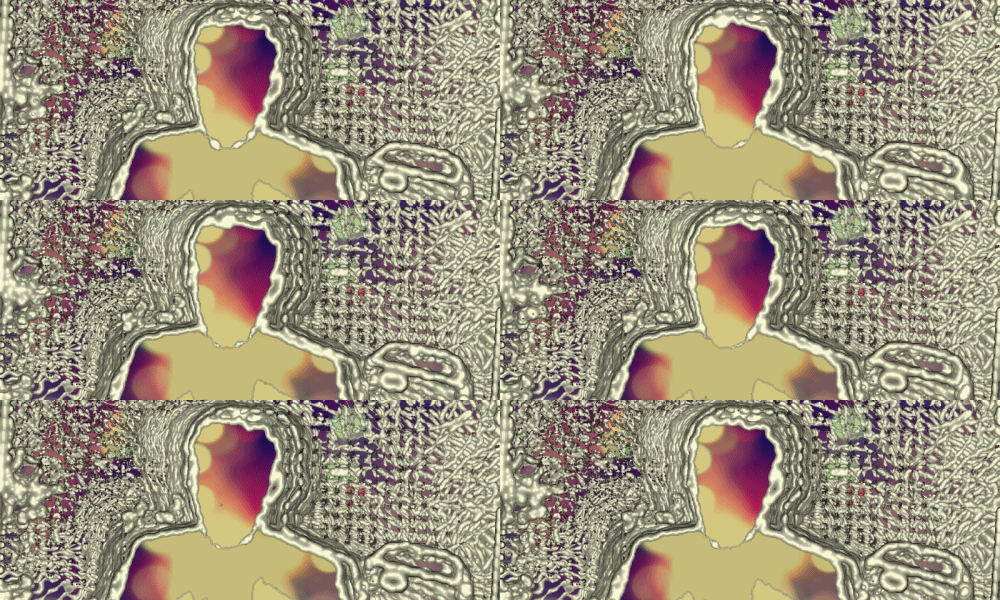
        
    </content>
</entry>

<entry>
    <title>4 Plays About Wollongong</title>
    <link rel="alternate" type="text/html" href="http://www.tobyk.com.au/2010/04/4-plays-about-wollongong.html" />
    <id>tag:www.tobyk.com.au,2010://1.16</id>

    <published>2010-04-16T03:36:46Z</published>
    <updated>2010-04-19T07:00:51Z</updated>

    <summary>Clare Bowen in The War on the Hill4 Plays about Wollongong was produced by Merrigong Theatre Company and opened in the Gordon Theatre, Illawarra Performing Arts Center on the 6th of November 2009. Merrigong commissioned four writers to each create...</summary>
    <author>
        <name>Toby K</name>
        <uri>http://www.tobyk.com.au</uri>
    </author>
    
        <category term="4 Plays About Wollongong" scheme="http://www.sixapart.com/ns/types#category" />
    
    <category term="lighting" label="Lighting" scheme="http://www.sixapart.com/ns/types#tag" />
    <category term="vision" label="Vision" scheme="http://www.sixapart.com/ns/types#tag" />
    
    <content type="html" xml:lang="en" xml:base="http://www.tobyk.com.au/">
        <![CDATA[<div align="center"><br /></div><div align="center"><a href="http://www.tobyk.com.au/assets_c/2009/12/The%20war%20on%20the%20hill-82.html" onclick="window.open('http://www.tobyk.com.au/assets_c/2009/12/The war on the hill-82.html','popup','width=567,height=867,scrollbars=no,resizable=no,toolbar=no,directories=no,location=no,menubar=no,status=no,left=0,top=0'); return false"><img src="http://www.tobyk.com.au/assets_c/2009/12/The%20war%20on%20the%20hill-thumb-567x867-82.jpg" alt="The war on the hill.jpg" class="mt-image-center" style="margin: 0pt auto 20px; text-align: center; display: block;" width="567" height="867" /></a><b>Clare Bowen in <i>The War on the Hill</i></b><br /></div><br /><br /><i>4 Plays about Wollongong</i> was produced by Merrigong Theatre Company and opened in the Gordon Theatre, Illawarra Performing Arts Center on the 6th of November 2009. <br /><br />Merrigong commissioned four writers to each create a work which had something to do with the Illawarra region, on the south coast of New South Wales, Australia. The plays that came back were all wildly different, and the task of making them work together as a single production fell on the creative team.&nbsp; <br /><br />The challenge was huge: 25 characters, four plays, one set, one stage, one design and only a few short weeks of rehearsal. Their hard work paid off. The show opened to an extremely positive audience response, leading to packed houses for the entire run. <br /><br />Read the full production report, including photos and lighting plan <a href="http://www.tobyk.com.au/2010/04/4-plays-about-wollongong-production-report.html">here</a>. <br /><br />Lighting and AV Designer: Toby Knyvett<br /><br />Director: Anne-Louise Rentell<br />Set and Costume Designer: Simon Greer<br />Production Manager: Daniel Potter<br />Stage Manager: Kelly Ukena<br />Technician and Audio 'Realiser': Allan Doyle<br />Set Construction: James Clarke<br />Assistant Stage Manager: Jessica Martin<br />Fight Choreographer: Scott Witt<br /><br /><i>The War on the Hill</i> by Simon Luckhurst<br /><i>Blame it on Dapto</i> by Mary Rachel Brown<br /><i>The Sameness of the Days</i> by Van Badham<br /><i>The Sound</i> by Marcel Dorney<br /><br />Featuring Adam Booth, Clare Bowen, Liz Burch and Terry Serio<br /><br />Photos by Andrew Tenison<br /><br /><br /><div><br /></div><div><br /></div>]]>
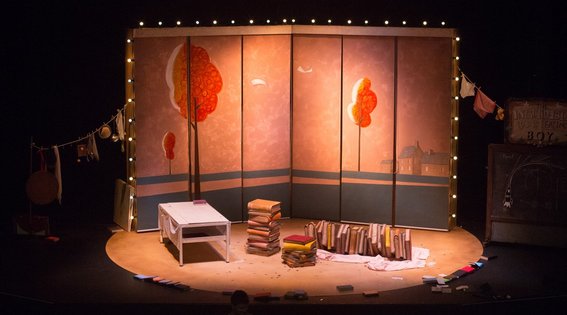
        
    </content>
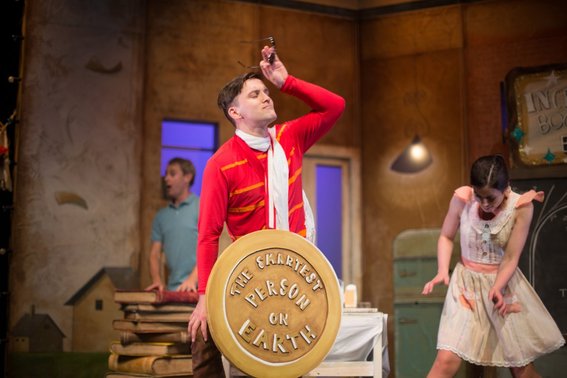
</entry>

<entry>
    <title>4 Plays About Wollongong Production Report</title>
    <link rel="alternate" type="text/html" href="http://www.tobyk.com.au/2010/04/4-plays-about-wollongong-production-report.html" />
    <id>tag:www.tobyk.com.au,2010://1.17</id>

    <published>2010-04-15T04:54:35Z</published>
    <updated>2010-04-20T23:44:45Z</updated>

    <summary><![CDATA[ Terry Serio and Adam Booth in Blame it on Dapto 4 Plays about Wollongong was commissioned by Merrigong Theatre Company. Each of the plays was radically different but all&nbsp;had to be realised within the same space. The major challenge...]]></summary>
    <author>
        <name>Toby K</name>
        <uri>http://www.tobyk.com.au</uri>
    </author>
    
        <category term="4 Plays About Wollongong" scheme="http://www.sixapart.com/ns/types#category" />
    
        <category term="Production Report" scheme="http://www.sixapart.com/ns/types#category" />
    
    <category term="lighting" label="Lighting" scheme="http://www.sixapart.com/ns/types#tag" />
    <category term="vision" label="Vision" scheme="http://www.sixapart.com/ns/types#tag" />
    
    <content type="html" xml:lang="en" xml:base="http://www.tobyk.com.au/">
        <![CDATA[<p><a onclick="window.open('http://www.tobyk.com.au/assets_c/2009/12/Blame it on Dapto 1-86.html','popup','width=567,height=850,scrollbars=no,resizable=no,toolbar=no,directories=no,location=no,menubar=no,status=no,left=0,top=0'); return false" href="http://www.tobyk.com.au/assets_c/2009/12/Blame%20it%20on%20Dapto%201-86.html"><img alt="Blame it on Dapto 1.jpg" src="http://www.tobyk.com.au/assets_c/2009/12/Blame%20it%20on%20Dapto%201-thumb-567x850-86.jpg" width="567" height="850" /></a></p>
<p><strong>Terry Serio and Adam Booth in <em>Blame it on Dapto</em></strong></p>
<p>4 Plays about Wollongong was commissioned by <a href="http://www.merrigong.com.au/">Merrigong Theatre Company</a>. Each of the   plays was radically different but all&nbsp;had to be realised within the same space.   The major challenge for the designers was to create an environment that would   allow for all of the texts to be seen as one production, yet facilitate them   individually.</p>
<p><em>The War on the Hill</em> and <em>Blame it on Dapto</em> were both set in   single rooms, whilst <em>The Sound</em> was set on a cliff overlooking the   ocean. <em>The Sameness of the Days </em>was set in eleven different locations,   some of which were re-visited several times. If <em>sameness</em> were a short   film this wouldn't have been a problem, however as a live production it was   something we had to take into account right from the start. <br />
</p>

<p><br /></p>

<p><a onclick="window.open('http://www.tobyk.com.au/assets_c/2009/12/Sameness of the days 1-89.html','popup','width=850,height=574,scrollbars=no,resizable=no,toolbar=no,directories=no,location=no,menubar=no,status=no,left=0,top=0'); return false" href="http://www.tobyk.com.au/assets_c/2009/12/Sameness%20of%20the%20days%201-89.html"><img alt="Sameness of the days 1.jpg" src="http://www.tobyk.com.au/assets_c/2009/12/Sameness%20of%20the%20days%201-thumb-567x382-89.jpg" width="567" height="382" /></a><br /></p><p><strong>Adam Booth and Terry Serio in </strong><em><strong>The   Sameness of the Days</strong></em></p>
Set, costumes and props have a lot of   roles to fill in a performance, and only one of those is providing information   regarding the literal setting of the action (assuming the text has a literal location). <span xml:lang="EN-AU" lang="EN-AU">Simon Greer   conceived a set that was responsive to both the informational and emotional needs of the texts. </span><br />
<br />
<p><span xml:lang="EN-AU" lang="EN-AU">The design consisted of&nbsp;two main elements: An angled, raked stage platform and&nbsp;a corrugated 'wall' sitting upstage. The wall was to be hung so it would float completely off the deck, the rake below seen to be continuing on upstage.&nbsp;This helped to give the impression of two separate objects that we could manipulate into becoming different environments, rather than a pre-assembled 'room space' with a wall and floor. </span><br />
  <br />
</p>

<p>The surface of the wall&nbsp;covered in corrugated plastic sheets, treated to look like sheet metal under   front lighting. Use of semi-transparent material meant that the wall could be   backlit and would glow. Initially I was worried that the corrugations would make   a mess of anything I&nbsp;projected on it, however we tested this early on and found   that&nbsp;it wasn't the case. Finally&nbsp;a door in the wall   covered our entrance and exit&nbsp;requirements.&nbsp; <br />
</p>

<p><br /></p>

<p><a onclick="window.open('http://www.tobyk.com.au/assets_c/2009/12/The Sound-94.html','popup','width=1134,height=756,scrollbars=no,resizable=no,toolbar=no,directories=no,location=no,menubar=no,status=no,left=0,top=0'); return false" href="http://www.tobyk.com.au/assets_c/2009/12/The%20Sound-94.html"><img alt="The Sound.jpg" src="http://www.tobyk.com.au/assets_c/2009/12/The%20Sound-thumb-567x378-94.jpg" width="567" height="378" /></a><br /></p><p><strong>Terry Serio, Adam Booth and Clare Bowen in </strong><em><strong>The Sound</strong></em><em><br />
</em></p>
<p>
  <!--          @page { margin: 2cm }          P { margin-bottom: 0.21cm }      -->
</p>

<p>For <em>The War on the Hill</em> and <em>Blame it on Dapto </em>the costumes and props did most of the talking for us   in terms of time/place, portraying a WWII era Bulli miners cottage and a small,   run down house in Modern Dapto respectively. The corrugated back wall of the set   also helped to give us some 'local character' in these two. In both I used side   light to bring out the shape of the corrugation.</p>
<!--          @page { margin: 2cm }          P { margin-bottom: 0.21cm }      -->
<p>The rapid   locale changes in <em>Sameness of the Days </em>is what originally brought us around to the idea of   projection. I'm a big fan of what projection can do, although I feel it is often   misused by directors attempting to turn live performance into film. For me one   of the biggest challenges of the whole project was getting <em>Sameness </em>from   place to place, perhaps with a certain filmic quality, but without caving in to   the temptation of portraying all the locations literally. </p>
<p><a onclick="window.open('http://www.tobyk.com.au/assets_c/2009/12/Blame it on Dapto 2-87.html','popup','width=850,height=567,scrollbars=no,resizable=no,toolbar=no,directories=no,location=no,menubar=no,status=no,left=0,top=0'); return false" href="http://www.tobyk.com.au/assets_c/2009/12/Blame%20it%20on%20Dapto%202-87.html"><img alt="Blame it on Dapto 2.jpg" src="http://www.tobyk.com.au/assets_c/2009/12/Blame%20it%20on%20Dapto%202-thumb-567x378-87.jpg" width="567" height="378" /></a><br /></p><p><strong>Adam Booth and&nbsp;Terry Serio in <em>Blame it on   Dapto</em></strong>.</p>
<p>
  <!--          @page { margin: 2cm }          P { margin-bottom: 0.21cm }      -->
</p>

<p>From my   perspective as AV designer the success of <em>Sameness</em> hinged   upon two conditions: Firstly that the images gave enough information to   establish the location, but were otherwise textural, working with the lighting   to enhance the space. For a scene set in one particular local nightclub I used a   close up image of flashing lights bouncing off of a water-damaged ceiling tile.   Combined with a deep bass sound cue it instantly said both seedy and nightclub,   but remained sufficiently flexible as to be an 'emotionally useful' part of the   environment of the rest of the scene, rather than a picture that had done its   job. Where I did used long-shots I was fortunate enough to be working on a   project that focused on local stories and was presented to a local audience.   Particular images, for instance a shot up the main street towards the hospital,   were instantly recognisable as belonging to a certain district and recalling   ideas about certain local businesses in that area. </p>
<p>The second   key component to the AV was the target surfaces. When working with projectors   it's always important to me that the set doesn't seem to be 'missing something'   when there isn't an image. I hate the idea of having a blank screen sitting   onstage. Initially (before the set was locked in) I suggested projecting onto   multiple flat surfaces in the space, the use of different surfaces in each scene   precluding any single one become the 'main screen'. (see a diagram <a href="http://www.tobyk.com.au/images/AudiencePerspective2.jpg">here</a>) This   idea carried over into the final design where there was a secondary projection   on the table/box object during <em>Sameness. </em>This secondary image was linked in to the first one,   usually another close up. These images augmented each other to lend to the idea   that the actors were in the scene with the projection, rather than just acting   in front of a two dimensional projected backdrop. </p>
<p><a onclick="window.open('http://www.tobyk.com.au/assets_c/2009/12/Sameness of the days 2-90.html','popup','width=850,height=567,scrollbars=no,resizable=no,toolbar=no,directories=no,location=no,menubar=no,status=no,left=0,top=0'); return false" href="http://www.tobyk.com.au/assets_c/2009/12/Sameness%20of%20the%20days%202-90.html"><img alt="Sameness of the days 2.jpg" src="http://www.tobyk.com.au/assets_c/2009/12/Sameness%20of%20the%20days%202-thumb-567x378-90.jpg" width="567" height="378" /></a></p>
<p><strong>Terry Serio, Clare Bowen and Adam Booth&nbsp;in </strong><em><strong>The   Sameness of the Days</strong><br />
</em></p>
It was decided that <i>The Sound</i> was to move away from the literalness of the other works, building up to a cathartic, emotional ending for the show. I was very happy with how the lighting turned out for <i>The Sound</i>. The entire thing ran as one fifteen minute long cue, plus some complicated timing with part cues. Overall it gave the impression of a long, red, sun-rise, starting in near darkness and finishing with a really strong low-angle light. Liberal use of booms gave it a lot of impact, although it meant the actors had to be very conscious of where the light for their faces was coming from. Tricky use of part cues allowed me to make sure certain critical lights were on before others, helping cover faces as the actors moved through the scene. 
<p><br />
  <em></em></p>
<p><a onclick="window.open('http://www.tobyk.com.au/assets_c/2009/12/The  Sound  2-93.html','popup','width=850,height=567,scrollbars=no,resizable=no,toolbar=no,directories=no,location=no,menubar=no,status=no,left=0,top=0');  return false" href="http://www.tobyk.com.au/assets_c/2009/12/The%20Sound%202-93.html"><img alt="The Sound 2.jpg" src="http://www.tobyk.com.au/assets_c/2009/12/The%20Sound%202-thumb-567x378-93.jpg" width="567" height="378" /></a><br /></p><p><strong>Terry Serio in <em>The   Sound</em></strong></p>
<strong></strong>
<p>
 For projection control I built a media server in <a href="http://www.vvvv.org/">vvvv</a>.  In the past I had experienced sluggish performance interfacing server  with console via an Enntec DMX USB PRO, but with Merrigongs new ETC  Ion I could now get the console and the computer to talk directly via  ART-NET. The speed was improved dramatically. For<i> 4 plays</i> I programmed full keystoning for each layer, allowing me to fit a clip  to any non-curved surface within the 'view' of the projector. One thing I  learnt this time round was that the play channel needs a 'play on  fade up' mode as I had a lot of difficulty getting the clip to stay  cued when the desk would do an automatic move-while-dark, preparing  the clip to be played in the next scene. It would set the clip to the  right position, colour, file etc... but would also start it playing,  so when it faded in in the next scene it could be at any point in  it's playback. A play-on-fade feature would have saved me some grief. Although perhaps by next time there will be a better option than  DMX control of media.</p><p><a onclick="window.open('http://www.tobyk.com.au/assets_c/2009/12/Blame   it on Dapto   3-88.html','popup','width=850,height=567,scrollbars=no,resizable=no,toolbar=no,directories=no,location=no,menubar=no,status=no,left=0,top=0');   return false" href="http://www.tobyk.com.au/assets_c/2009/12/Blame%20it%20on%20Dapto%203-88.html"><img alt="Blame it on Dapto 3.jpg" src="http://www.tobyk.com.au/assets_c/2009/12/Blame%20it%20on%20Dapto%203-thumb-567x378-88.jpg" width="567" height="378" /></a><strong><br /></strong></p><p><strong>Terry Serio and Adam Booth in <em>Blame   it on Dapto</em></strong><br />  </p>
<p>I  was generally happy with the ION (its timing control was very handy  in <i>The Sound</i>)  but found it to be a real pain if you are making your own fixture  profiles, particularly when you're trying to do something a bit  different. You can't rename parameters and they are permanently  assigned to certain palettes, meaning that I was either forced to  stick with ETC's model of how I should control my media, or I could  do it my way but with non-sensical names (I.E there weren't enough XY  parameters for keystoning in the focus palette to name each X1, Y1,  X2, Y2, X3, Y3, X4, Y4, so they had to be Pan, Tilt, Pan2, Tilt2, X,  Tilt 3 and Y, Tilt 4. There were enough in the beam palette, but I  wanted beam palettes to exclusively control file and content rather  than position) In the end I chose the latter because having accurate  palette control was better than having accurate names.</p>
<p><a onclick="window.open('http://www.tobyk.com.au/assets_c/2009/12/Sameness of the days 4-92.html','popup','width=850,height=574,scrollbars=no,resizable=no,toolbar=no,directories=no,location=no,menubar=no,status=no,left=0,top=0'); return false" href="http://www.tobyk.com.au/assets_c/2009/12/Sameness%20of%20the%20days%204-92.html"><img alt="Sameness of the days 4.jpg" src="http://www.tobyk.com.au/assets_c/2009/12/Sameness%20of%20the%20days%204-thumb-567x382-92.jpg" width="567" height="382" /></a> <br /></p><p><strong>Liz Burch and Clare Bowen in <em>The Sameness of the Days</em><br /></strong></p><p><strong><br />
  </strong>
<i>4 Plays about Wollongong </i>is a result of the dedicated team at Merrigong Theatre Company. It's truly fantastic that a regional company like Merrigong is in a position to commission and fund a high quality professional production that celebrates the local community in such a way. The audience response was overwhelming and I'm extremely grateful to have been part of the project. I look forward to seeing the team again somewhere down the road. <br /></p><p>For those interested find the plan <a href="http://www.tobyk.com.au/4%20Plays%20about%20Wollongong/4PlaysLXWeb.pdf">here</a>.</p><p>Full credits <a href="http://www.tobyk.com.au/2010/04/4-plays-about-wollongong.html">here</a>.<br /></p><p><br /></p><p></p><p><br />
  <br />
</p>
]]>
        

    </content>
</entry>

<entry>
    <title>What is Project: ALICE?</title>
    <link rel="alternate" type="text/html" href="http://www.tobyk.com.au/2009/08/project-alice.html" />
    <id>tag:www.tobyk.com.au,2009://1.14</id>

    <published>2009-08-17T23:00:00Z</published>
    <updated>2009-09-07T06:56:23Z</updated>

    <summary>Project: ALICE is a new Australian work inspired by the Lewis Caroll classic Alice in Wonderland. It rewrites the tale from a generation Y perspective, exploring the rabbit holes of technology and isolation. It premiered in Track 8, CarriageWorks, Sydney,...</summary>
    <author>
        <name>Toby K</name>
        <uri>http://www.tobyk.com.au</uri>
    </author>
    
        <category term="Project: ALICE" scheme="http://www.sixapart.com/ns/types#category" />
    
    <category term="lighting" label="Lighting" scheme="http://www.sixapart.com/ns/types#tag" />
    <category term="productionmanagement" label="Production Management" scheme="http://www.sixapart.com/ns/types#tag" />
    <category term="vision" label="Vision" scheme="http://www.sixapart.com/ns/types#tag" />
    
    <content type="html" xml:lang="en" xml:base="http://www.tobyk.com.au/">
        <![CDATA[<span class="mt-enclosure mt-enclosure-image" style="display: inline;"><a href="http://www.tobyk.com.au/assets_c/2009/08/01Pre-show-46.html" onclick="window.open('http://www.tobyk.com.au/assets_c/2009/08/01Pre-show-46.html','popup','width=1000,height=667,scrollbars=no,resizable=no,toolbar=no,directories=no,location=no,menubar=no,status=no,left=0,top=0'); return false"><img src="http://www.tobyk.com.au/assets_c/2009/08/01Pre-show-thumb-600x400-46.jpg" alt="01Pre-show.jpg" class="mt-image-center" style="margin: 0pt auto 20px; text-align: center; display: block;" width="600" height="400" /></a></span><i>Project: ALICE</i> is a new Australian work inspired by the Lewis Caroll classic <i>Alice in Wonderland. </i>It rewrites the tale from a generation Y perspective, exploring the rabbit holes of technology and isolation. It premiered in Track 8, <a href="http://www.carriageworks.com.au/">CarriageWorks,</a> Sydney, Australia in May 2009. <br /><br />For this project we went all out on the production elements - A/V, lighting and sound were huge parts of the show. In fact they needed to be huge in order to match the colossal energy&nbsp; of the performers.<br /><br />Read the full production report with photos <a href="http://www.tobyk.com.au/2009/08/project-alice-production-report.html">here</a>.<br /><br />Director / Design: Mark Haslam<br /><br />Alice:&nbsp; Jess Cook aka Cook'n'kitch<br />
The Hatter: Bravo Child<br />
<br clear="all" />Visuals: Melvin J Montalban<br />Co-Design / Production Management: Toby Knyvett<br /><br />Written by: Mark Haslam, Alana Hicks, Bravo Child, Jess Cook, Miles Merrill, Donne Restrom<br /><br />Photos by Tania Lambert<br />

<br clear="all" />Special thanks to Emma Lockheart-Wilson, Amber Silk, Alistair Davies and Daniel Potter.<br /> <div><br /></div>]]>
        
    </content>
</entry>

<entry>
    <title>Project: ALICE Production Report. </title>
    <link rel="alternate" type="text/html" href="http://www.tobyk.com.au/2009/08/project-alice-production-report.html" />
    <id>tag:www.tobyk.com.au,2009://1.15</id>

    <published>2009-08-17T22:54:38Z</published>
    <updated>2009-09-07T06:52:58Z</updated>

    <summary>Project: ALICE was always going to be very ambitious, particularly from a technical perspective. For me it felt like I was doing one of those rare projects where we could go all out on the technical production. There was no...</summary>
    <author>
        <name>Toby K</name>
        <uri>http://www.tobyk.com.au</uri>
    </author>
    
        <category term="Production Report" scheme="http://www.sixapart.com/ns/types#category" />
    
        <category term="Project: ALICE" scheme="http://www.sixapart.com/ns/types#category" />
    
    <category term="lighting" label="Lighting" scheme="http://www.sixapart.com/ns/types#tag" />
    <category term="vision" label="Vision" scheme="http://www.sixapart.com/ns/types#tag" />
    
    <content type="html" xml:lang="en" xml:base="http://www.tobyk.com.au/">
        <![CDATA[<i>Project: ALICE</i> was always going to be very ambitious, particularly from a technical perspective. For me it felt like I was doing one of those rare projects where we could go all out on the technical production. There was no such thing as 'too much' (as long as we could afford it). Often we were consciously trying to induce a trance-like response in the audience. It was a big risk, but it paid off with a show that looked absolutely amazing. <br /><br /><span class="mt-enclosure mt-enclosure-image" style="display: inline;"><a href="http://www.tobyk.com.au/assets_c/2009/08/02Opening-49.html" onclick="window.open('http://www.tobyk.com.au/assets_c/2009/08/02Opening-49.html','popup','width=1000,height=1500,scrollbars=no,resizable=no,toolbar=no,directories=no,location=no,menubar=no,status=no,left=0,top=0'); return false"><img src="http://www.tobyk.com.au/assets_c/2009/08/02Opening-thumb-600x900-49.jpg" alt="02Opening.jpg" class="mt-image-center" style="margin: 0pt auto 20px; text-align: center; display: block;" width="600" height="900" /></a></span>The lighting was a co-design between myself and the director, Mark Haslam. I've know Mark for about six years and this was the first time we've done a show together. Unlike many directors Mark has a strong background in technical theatre, as well as an impressive literary and physical practice. It's one of those odd things that in Australian theatre director training is based on working with actors and text and so they often rely on designers to supply nearly all of the technical direction. Which is the opposite of many Australian film and TV directors whose training is primarily based around cameras and technology. In both cases I think a balanced approach gets the best results, which is why it was particularly good to work with Mark. <br /><br /><span class="mt-enclosure mt-enclosure-image" style="display: inline;"><a href="http://www.tobyk.com.au/assets_c/2009/08/03RabbitHole-52.html" onclick="window.open('http://www.tobyk.com.au/assets_c/2009/08/03RabbitHole-52.html','popup','width=1000,height=1500,scrollbars=no,resizable=no,toolbar=no,directories=no,location=no,menubar=no,status=no,left=0,top=0'); return false"><img src="http://www.tobyk.com.au/assets_c/2009/08/03RabbitHole-thumb-600x900-52.jpg" alt="03RabbitHole.jpg" class="mt-image-center" style="margin: 0pt auto 20px; text-align: center; display: block;" width="600" height="900" /></a></span><i>Alice in Wonderland</i> is the story of a young person lost in a senseless world. For this production we placed Alice in a generation Y context, mixing real stories from our Gen Y writers with Lewis Carroll imagery. Our main setpiece was a rusted jungle gym, infested with televisions and computer monitors. For the lighting Mark came to me with a concept of several tall booms surrounding the space rigged with open white par-cans. The idea was to provide a stadium-esque sense of depth, so that the production could move from intimate moments to huge over-the-top rock and roll looks. Chases and movement allowed a sense of playfulness in contrast to the threat of being completely overwhelmed by the intensity of the light. We specifically referenced images of night clubs, city lights and the blinking of neon advertising. <br /><br /><span class="mt-enclosure mt-enclosure-image" style="display: inline;"><a href="http://www.tobyk.com.au/assets_c/2009/09/04Club-55.html" onclick="window.open('http://www.tobyk.com.au/assets_c/2009/09/04Club-55.html','popup','width=1000,height=667,scrollbars=no,resizable=no,toolbar=no,directories=no,location=no,menubar=no,status=no,left=0,top=0'); return false"><img src="http://www.tobyk.com.au/assets_c/2009/09/04Club-thumb-600x400-55.jpg" alt="04Club.jpg" class="mt-image-center" style="margin: 0pt auto 20px; text-align: center; display: block;" width="600" height="400" /></a></span>In practice the par cans proved to be an amazing depth effect. With so many pointing directly in the audiences eyes we had to be very careful not to blind, rarely taking them above 15%. I found that when they were just glowing, at about 5%, your eyes would adjust so that all you could see behind them was pure darkness - much better than seeing a bunch of black drapes at the back of the space. <br /><br /><span class="mt-enclosure mt-enclosure-image" style="display: inline;"><a href="http://www.tobyk.com.au/assets_c/2009/09/05IntrospectiveMoment-58.html" onclick="window.open('http://www.tobyk.com.au/assets_c/2009/09/05IntrospectiveMoment-58.html','popup','width=1000,height=1500,scrollbars=no,resizable=no,toolbar=no,directories=no,location=no,menubar=no,status=no,left=0,top=0'); return false"><img src="http://www.tobyk.com.au/assets_c/2009/09/05IntrospectiveMoment-thumb-600x900-58.jpg" alt="05IntrospectiveMoment.jpg" class="mt-image-center" style="margin: 0pt auto 20px; text-align: center; display: block;" width="600" height="900" /></a></span>We wanted each par 64 to be individually controlled. I also wanted to run our lighting desk in two preset mode. This meant that I was limited to 48 DMX control channels in total and of these 48 channels we needed to use 32 for our parcans, plus another 7 for our hazer and strobe. This left only 9 channels for lights that weren't open white par-cans pointing straight into the audience. For me this was a big risk - I was 'investing' three quarters of my potential control into a bunch of lights that might only provide two or three different looks. For a production that wanted to go so many different places it seemed insane to have so little variety. There was no way I was going to have enough channels left to do anything else and have a proper front-of-house rig so in the end I took another risk and cut FOH lighting completely. This meant there would be no conventional face light from the front - faces would be lit entirely from the sides. <br /><br /><span class="mt-enclosure mt-enclosure-image" style="display: inline;"><a href="http://www.tobyk.com.au/assets_c/2009/09/06Celebrity-61.html" onclick="window.open('http://www.tobyk.com.au/assets_c/2009/09/06Celebrity-61.html','popup','width=1000,height=1500,scrollbars=no,resizable=no,toolbar=no,directories=no,location=no,menubar=no,status=no,left=0,top=0'); return false"><img src="http://www.tobyk.com.au/assets_c/2009/09/06Celebrity-thumb-600x900-61.jpg" alt="06Celebrity.jpg" class="mt-image-center" style="margin: 0pt auto 20px; text-align: center; display: block;" width="600" height="900" /></a></span>I can say now that those risks were all worth taking. I found that the parcans were incredibly flexible. They created their own brand of&nbsp; 'parcan architecture' - even simple patterns were entrancing. The reason I use the word architecture is that their various arrangements seemed to suggest a sort of logic or coherence in their relationship to one another. This made them seem like a much more natural setting for the action than a bunch of lights on stands might otherwise seem. Track 8 is unusual as a small venue in that it has a fairly high ceiling. My top parcans were at 5.2m in the air, giving a sense of something ascending into the darkness. A chase from the top to the bottom of a boom would give the feeling of light falling from above. The stands were arranged so the cans filled your peripheral vision. Various chases at a low intensity were reminiscent of the flickering patterns you see when you close your eyes tight. In this way you could suggest both the huge depth of a stadium and the intimacy of something you only experience behind your own eyelids - simultaneously. <br /><br /><span class="mt-enclosure mt-enclosure-image" style="display: inline;"><a href="http://www.tobyk.com.au/assets_c/2009/09/07Travel-64.html" onclick="window.open('http://www.tobyk.com.au/assets_c/2009/09/07Travel-64.html','popup','width=1000,height=667,scrollbars=no,resizable=no,toolbar=no,directories=no,location=no,menubar=no,status=no,left=0,top=0'); return false"><img src="http://www.tobyk.com.au/assets_c/2009/09/07Travel-thumb-600x400-64.jpg" alt="07Travel.jpg" class="mt-image-center" style="margin: 0pt auto 20px; text-align: center; display: block;" width="600" height="400" /></a></span>Occasionally I see shows that use a great deal of atmospheric effects and I think they draw attention to the lighting at the expense of the action, but for this particular show I can't understate how much value the use of haze actually brought to the production. The great thing about using haze with tungsten lights is that it brings the life of the filament out onto the stage. Suddenly the audience can see the light ramping up, heating up, as it excites the air in front of it - seemingly moments before it is seen onstage. I think it worked for ALICE because this life was actually taken into account in the lighting design. All the fades were designed to draw the eye to the lamp first and then follow the beam to it's target. The haze meant that there was truly a difference between 5% and 10%, from a glowing eye to a column of light. Haze was provided by a <a href="http://www.looksolutions.com/">Look Solutions</a> Unique 2, which did the job beautifully. <br /><br /><span class="mt-enclosure mt-enclosure-image" style="display: inline;"><a href="http://www.tobyk.com.au/assets_c/2009/09/08Buddah-67.html" onclick="window.open('http://www.tobyk.com.au/assets_c/2009/09/08Buddah-67.html','popup','width=1000,height=667,scrollbars=no,resizable=no,toolbar=no,directories=no,location=no,menubar=no,status=no,left=0,top=0'); return false"><img src="http://www.tobyk.com.au/assets_c/2009/09/08Buddah-thumb-600x400-67.jpg" alt="08Buddah.jpg" class="mt-image-center" style="margin: 0pt auto 20px; text-align: center; display: block;" width="600" height="400" /></a></span>We had one more trick up our sleeves in the lighting department: a <a href="http://www.martin.com/">Martin</a> Atomic 3000 Strobe, which was kindly lent to us by a friend. However as we had no colour in the rig&nbsp; we decided to fit a colour scroller to it, so that on top of our tungsten warmth we could cut to some saturated primary and secondary colours. Big cyan, magenta, yellow red, green and blue moments. Martin makes a scroller specifically for the Atomic, and we thought it wouldn't cost too much to hire one for the run. It turns out this wasn't the case - I tried everyone in Sydney who had one and the cheapest I could get was $400 a week - I imagine because they didn't want to hire one without the strobe itself attached. On principle I refused to pay this for a device that wasn't even a light - but that's no reason to let go of a good idea, so I went a little bit DIY. After some trial and error I managed to combine two (much cheaper) par 64 scrollers into a single scroller for the Atomic, with the bonus of being able to operate each separately and achieve split colour strobe effects! That being said we didn't end up using the strobe as much as we envisioned, the parcans ended up providing as with many more looks than we anticipated and so we left the strobe out. Perhaps we had enough lights pointing in the audiences eyes anyhow....<br /><br /><span class="mt-enclosure mt-enclosure-image" style="display: inline;"><a href="http://www.tobyk.com.au/assets_c/2009/09/09Rainfall-70.html" onclick="window.open('http://www.tobyk.com.au/assets_c/2009/09/09Rainfall-70.html','popup','width=1000,height=667,scrollbars=no,resizable=no,toolbar=no,directories=no,location=no,menubar=no,status=no,left=0,top=0'); return false"><img src="http://www.tobyk.com.au/assets_c/2009/09/09Rainfall-thumb-600x400-70.jpg" alt="09Rainfall.jpg" class="mt-image-center" style="margin: 0pt auto 20px; text-align: center; display: block;" width="600" height="400" /></a></span>The jungle gym was a fantastic set piece, no matter what lights it was hit with it looked amazing. It also had this great quality of playfulness, every time I went near it I couldn't help but climb all over it. Originally we were intending to build it ourselves but then heard <a href="http://www.sydneytheatre.com.au/">STC</a> had just used one in their production of <i>War Of The Roses Part 2</i>. We made some enquiries and they offered to hire it to us for much less than it would cost to build one. It was a little bit like recycling - giving an object a second life. It was nice that it had it's own history and we were making it work for us, rather than it being an object we pluck straight out of our imaginations, build, and then destroy when we are done. In my opinion this kind of recycling should happen more often in the theatre scene. We constantly re-interpret the same texts, why not the same objects and spaces? <br /><br /><span class="mt-enclosure mt-enclosure-image" style="display: inline;"><a href="http://www.tobyk.com.au/assets_c/2009/09/10Aftermath-73.html" onclick="window.open('http://www.tobyk.com.au/assets_c/2009/09/10Aftermath-73.html','popup','width=1000,height=1500,scrollbars=no,resizable=no,toolbar=no,directories=no,location=no,menubar=no,status=no,left=0,top=0'); return false"><img src="http://www.tobyk.com.au/assets_c/2009/09/10Aftermath-thumb-600x900-73.jpg" alt="10Aftermath.jpg" class="mt-image-center" style="margin: 0pt auto 20px; text-align: center; display: block;" width="600" height="900" /></a></span>The A/V content was a collaboration between Mark and his good buddy <a href="http://www.melvinjmontalban.com/">Melvin J. Montalban</a>. Melvin has amazing skills with everything filmic and graphic, and as such put together some incredible clips for the show. My job was to source and realise the actual physical objects - the TVs. In the image above you can see the industrial looking one hanging above the jungle gym. This TV not only had to work but also conceal quite a few kilograms of synthetic rain - which had to fall on Alice midway through the show. Originally I was intending to take the speakers out of the TV and put the rain (acrylic plastic chips) inside the actual chassis. In the end I steered away from this because I thought the TV might overheat with all the extra plastic inside. In the end we put a tray underneath and a hopper on the back. This was filled with plastic before each show and would provide a steady stream of rain for a good 40 seconds This was not only a mindblowing moment - one girl asked 'How come her hair isn't wet?' - but left a sea of plastic all over the floor. My favourite moment is pictured above - where the lights fade up after the rain. The 7 second fade was just perfect, with the TV still swinging on its chains. Like opening the gates to a wasteland. The plastic then went on to pick up the image in the next scene where we projected on the floor. Magic. <br /><br /><span class="mt-enclosure mt-enclosure-image" style="display: inline;"><a href="http://www.tobyk.com.au/assets_c/2009/09/11Tokyo-76.html" onclick="window.open('http://www.tobyk.com.au/assets_c/2009/09/11Tokyo-76.html','popup','width=1000,height=667,scrollbars=no,resizable=no,toolbar=no,directories=no,location=no,menubar=no,status=no,left=0,top=0'); return false"><img src="http://www.tobyk.com.au/assets_c/2009/09/11Tokyo-thumb-600x400-76.jpg" alt="11Tokyo.jpg" class="mt-image-center" style="margin: 0pt auto 20px; text-align: center; display: block;" width="600" height="400" /></a></span><span class="mt-enclosure mt-enclosure-image" style="display: inline;"><a href="http://www.tobyk.com.au/assets_c/2009/09/12TokyoExplodes-79.html" onclick="window.open('http://www.tobyk.com.au/assets_c/2009/09/12TokyoExplodes-79.html','popup','width=1000,height=1500,scrollbars=no,resizable=no,toolbar=no,directories=no,location=no,menubar=no,status=no,left=0,top=0'); return false"><img src="http://www.tobyk.com.au/assets_c/2009/09/12TokyoExplodes-thumb-600x900-79.jpg" alt="12TokyoExplodes.jpg" class="mt-image-center" style="margin: 0pt auto 20px; text-align: center; display: block;" width="600" height="900" /></a></span>Equipment:<br />24 x Par 64 MFL<br />8 x Par 64 NSP (used for the 8 cans closest to the floor)<br />6 x Selecon 1000w Fresnel<br />1 x Martin Atomic 3000 Strobe<br />2 x Camelont Rainbow Scroller<br />1 x Look Solutions Unique 2 Hazer<br />1 x Jands Event 48 <br />3 x Jands FP12 dimmer rack<br />1 x Jands GP12 dimmer rack<br /><br />1 x Panasonic PT-D4000E Projector (rigged to project on floor)&nbsp; <br />2 x TV<br />2 x Scan converter<br />3 x Computer Monitor<br />1 x Mac G5 Pro with 6 x DVI-I Ouputs. Running Qlab. <br /><br />A big thanks to Emma Lockheart-Wilson, Amber Silk, Daniel Potter and Alistair Davies . <br /><br />Photos by Tania Lambert <br /><br />]]>
        
    </content>
</entry>

<entry>
    <title>Snatch Paradise Production Report</title>
    <link rel="alternate" type="text/html" href="http://www.tobyk.com.au/2009/07/snatch-paradise-production-report.html" />
    <id>tag:www.tobyk.com.au,2009://1.13</id>

    <published>2009-07-25T07:04:12Z</published>
    <updated>2009-08-17T23:28:54Z</updated>

    <summary>The Snatch Paradise gala premiere was a challenge because not only did it have to look and sound great but it was also a fund-raising event held in order to send the show over to England. It needed to make...</summary>
    <author>
        <name>Toby K</name>
        <uri>http://www.tobyk.com.au</uri>
    </author>
    
        <category term="Production Report" scheme="http://www.sixapart.com/ns/types#category" />
    
    <category term="lighting" label="Lighting" scheme="http://www.sixapart.com/ns/types#tag" />
    <category term="productionmanagement" label="Production Management" scheme="http://www.sixapart.com/ns/types#tag" />
    <category term="vision" label="Vision" scheme="http://www.sixapart.com/ns/types#tag" />
    
    <content type="html" xml:lang="en" xml:base="http://www.tobyk.com.au/">
        <![CDATA[The <i>Snatch Paradise </i>gala premiere was a challenge because not only did it have to look and sound great but it was also a fund-raising event held in order to send the show over to England. It needed to make money. With the tickets set at $50 a head (very pricey for independent theatre) we set an equally high bar for the technical production, however it had to cost us as a little as possible. Time to call in some favours. <br /><br />The venue was <a href="http://www.queenstreetstudio.com/fraserstudios.html">Fraser Studios</a> - a not-for-profit artspace in Chippendale, Sydney. The building itself is a beautiful warehouse with plenty of character, however no staging or lighting infrastructure so we had to bring everything in ourselves. <br /><br />With these factors in mind we needed to find a design concept that was affordable but looked great. We decided to accentuate what we already had: The beautiful architecture of the space and several playful artworks that Fraser Studios kindly gave us permission to use in our set. <br /><br /><span class="mt-enclosure mt-enclosure-image" style="display: inline;"><a href="http://www.tobyk.com.au/assets_c/2009/07/SnatchSet-6.html" onclick="window.open('http://www.tobyk.com.au/assets_c/2009/07/SnatchSet-6.html','popup','width=800,height=600,scrollbars=no,resizable=no,toolbar=no,directories=no,location=no,menubar=no,status=no,left=0,top=0'); return false"><img src="http://www.tobyk.com.au/assets_c/2009/07/SnatchSet-thumb-600x450-6.jpg" alt="SnatchSet.jpg" class="mt-image-center" style="margin: 0pt auto 20px; text-align: center; display: block;" width="600" height="450" /></a></span><br />The whole night was designed to feel like a cosmopolitan warehouse party rather than a theatre show and some domestic party lights helped us get there. I normally wouldn't use these but in industrial spaces I find they really help to soften the room and give it an 'indie' look. <br /><br /><span class="mt-enclosure mt-enclosure-image" style="display: inline;"><a href="http://www.tobyk.com.au/assets_c/2009/07/SnatchXmasLights-9.html" onclick="window.open('http://www.tobyk.com.au/assets_c/2009/07/SnatchXmasLights-9.html','popup','width=800,height=593,scrollbars=no,resizable=no,toolbar=no,directories=no,location=no,menubar=no,status=no,left=0,top=0'); return false"><img src="http://www.tobyk.com.au/assets_c/2009/07/SnatchXmasLights-thumb-600x444-9.jpg" alt="SnatchXmasLights.jpg" class="mt-image-center" style="margin: 0pt auto 20px; text-align: center; display: block;" width="600" height="444" /></a></span><br />Due to a lack of setup time and power I decided to use a number of colour changing fixtures, both LED and discharge based. I approached some friends and managed to get hold of some old <a href="http://www.claypaky.it/english/fr_main.htm">Clay Paky</a> Combicolours. These are a 575w discharge changer with two colour wheels and a gobo wheel. These units had no lenses so the fixture wasn't capable of producing sharp images, however the gobo wheel was still useful in its continuous spin mode where it could induce a gentle movement in a static colour. The colours themselves were typical bright discharge hues although there were a couple of 'theatre-friendly' pastels, which was a nice surprise. The other nice suprise was the relatively smooth mechanical dimmer, something I wasn't expecting from an older fixture. I used them to light the ceiling throughout the party and the show, highlighting the warehouse architecture.<br /><br /><span class="mt-enclosure mt-enclosure-image" style="display: inline;"><a href="http://www.tobyk.com.au/assets_c/2009/07/SnatchRoofColour-12.html" onclick="window.open('http://www.tobyk.com.au/assets_c/2009/07/SnatchRoofColour-12.html','popup','width=800,height=605,scrollbars=no,resizable=no,toolbar=no,directories=no,location=no,menubar=no,status=no,left=0,top=0'); return false"><img src="http://www.tobyk.com.au/assets_c/2009/07/SnatchRoofColour-thumb-600x453-12.jpg" alt="SnatchRoofColour.jpg" class="mt-image-center" style="margin: 0pt auto 20px; text-align: center; display: block;" width="600" height="453" /></a></span><br />I also used four <a href="http://www.martin.com/">Martin</a> CX-10 colour changers, a discontinued 250w discharge unit. These have one colour wheel, a gobo wheel and a frost, as well as a mechanical dimmer/strobe. I found the colours a bit jarring, even with the colour correction filter from the gobo wheel in place. The dimming was also poor, a linear fade on the hog producing a stuttering fade from the unit. The frost saved them though, acheiving a nearly 180 degree flood over the back wall. Whilst I can't reccomend these for much, as uplights on walls they do get the job done. I had two of them on the floor behind the set and they filled the rear wall nicely. <br /><br /><span class="mt-enclosure mt-enclosure-image" style="display: inline;"><a href="http://www.tobyk.com.au/assets_c/2009/07/SnatchBackColour-15.html" onclick="window.open('http://www.tobyk.com.au/assets_c/2009/07/SnatchBackColour-15.html','popup','width=800,height=608,scrollbars=no,resizable=no,toolbar=no,directories=no,location=no,menubar=no,status=no,left=0,top=0'); return false"><img src="http://www.tobyk.com.au/assets_c/2009/07/SnatchBackColour-thumb-600x456-15.jpg" alt="SnatchBackColour.jpg" class="mt-image-center" style="margin: 0pt auto 20px; text-align: center; display: block;" width="600" height="456" /></a></span><br />Other lighting gear included some cheap LED pinspots and panels I managed to get for gratis. The pinspots were set to auto mode and placed in a few choice locations around the place where they did their job as party decoration.<br /><br /><span class="mt-enclosure mt-enclosure-image" style="display: inline;"><a href="http://www.tobyk.com.au/assets_c/2009/07/SnatchBathtub-18.html" onclick="window.open('http://www.tobyk.com.au/assets_c/2009/07/SnatchBathtub-18.html','popup','width=600,height=800,scrollbars=no,resizable=no,toolbar=no,directories=no,location=no,menubar=no,status=no,left=0,top=0'); return false"><img src="http://www.tobyk.com.au/assets_c/2009/07/SnatchBathtub-thumb-600x800-18.jpg" alt="SnatchBathtub.jpg" class="mt-image-center" style="margin: 0pt auto 20px; text-align: center; display: block;" width="600" height="800" /></a></span>&nbsp;<br />I used the panels as a clubby backlight for some of the songs, unfortunately the dimming on them was even worse than the CX-10s so they ended up just switching through colours.<br /><br /><span class="mt-enclosure mt-enclosure-image" style="display: inline;"><a href="http://www.tobyk.com.au/assets_c/2009/07/SnatchPanels-21.html" onclick="window.open('http://www.tobyk.com.au/assets_c/2009/07/SnatchPanels-21.html','popup','width=800,height=600,scrollbars=no,resizable=no,toolbar=no,directories=no,location=no,menubar=no,status=no,left=0,top=0'); return false"><img src="http://www.tobyk.com.au/assets_c/2009/07/SnatchPanels-thumb-600x450-21.jpg" alt="SnatchPanels.jpg" class="mt-image-center" style="margin: 0pt auto 20px; text-align: center; display: block;" width="600" height="450" /></a></span><br /><i>Snatch Paradise </i>also has a number of projected cues. I knew the projector I had wasn't going to cut through the lighting so we opted to use some TV's to do the main cues. I still set the projector up for an interesting look on a garage door. <br /><br /><span class="mt-enclosure mt-enclosure-image" style="display: inline;"><a href="http://www.tobyk.com.au/assets_c/2009/07/SnatchGarageDoor-24.html" onclick="window.open('http://www.tobyk.com.au/assets_c/2009/07/SnatchGarageDoor-24.html','popup','width=800,height=590,scrollbars=no,resizable=no,toolbar=no,directories=no,location=no,menubar=no,status=no,left=0,top=0'); return false"><img src="http://www.tobyk.com.au/assets_c/2009/07/SnatchGarageDoor-thumb-600x442-24.jpg" alt="SnatchGarageDoor.jpg" class="mt-image-center" style="margin: 0pt auto 20px; text-align: center; display: block;" width="600" height="442" /></a></span><br />I didn't want the TV's to sit blank when there were no AV cues so I created a simple media server in <a href="http://www.vvvv.org/tiki-index.php">vvvv</a> - a multipurpose programming environment suited to multimedia applications. The patch I created allowed the colour to be controlled via DMX, this way the tv image could be integrated in all the cues rather than simply being a black square on the stage. <br /><br /><span class="mt-enclosure mt-enclosure-image" style="display: inline;"><a href="http://www.tobyk.com.au/assets_c/2009/07/SnatchTvs-27.html" onclick="window.open('http://www.tobyk.com.au/assets_c/2009/07/SnatchTvs-27.html','popup','width=800,height=944,scrollbars=no,resizable=no,toolbar=no,directories=no,location=no,menubar=no,status=no,left=0,top=0'); return false"><img src="http://www.tobyk.com.au/assets_c/2009/07/SnatchTvs-thumb-600x708-27.jpg" alt="SnatchTvs.jpg" class="mt-image-center" style="margin: 0pt auto 20px; text-align: center; display: block;" width="600" height="708" /></a></span>Lighting: <br />1 x Hog 600<br />8 x LED pinspot<br />6 x LED panel<br />4 x Martin Cx 10 Extreme<br />6 x Clay Paky CombiColour<br />2 x Selecon Acclaim 650w PC<br />1 x Theatrelight Single channel Dimmer<br /><br />AV:<br />1 x Denon DN-V 210 pro DVD player<br />1 x Edirol V-4 video mixer<br />1 x Laptop w/ Enttec DMX USB Pro<br />1 x Scan converter - VGA to Composite<br />4 x Television<br />1 x Mitsubishi Projector<br /><div><br /></div>]]>
        
    </content>
</entry>

<entry>
    <title>Snatch Paradise</title>
    <link rel="alternate" type="text/html" href="http://www.tobyk.com.au/2009/07/snatch-paradise.html" />
    <id>tag:www.tobyk.com.au,2009://1.12</id>

    <published>2009-07-25T06:31:31Z</published>
    <updated>2009-07-25T13:00:50Z</updated>

    <summary>Snatch Paradise is the first international Gemeinschaft Dogs production. After a limited preview season in Sydney it heads to the Edinburgh Festival Fringe with an all Australian cast. I looked after all of the technical production for the Sydney season,...</summary>
    <author>
        <name>Toby K</name>
        <uri>http://www.tobyk.com.au</uri>
    </author>
    
        <category term="Snatch Paradise" scheme="http://www.sixapart.com/ns/types#category" />
    
    <category term="lighting" label="Lighting" scheme="http://www.sixapart.com/ns/types#tag" />
    <category term="productionmanagement" label="Production Management" scheme="http://www.sixapart.com/ns/types#tag" />
    <category term="vision" label="Vision" scheme="http://www.sixapart.com/ns/types#tag" />
    
    <content type="html" xml:lang="en" xml:base="http://www.tobyk.com.au/">
        <![CDATA[<i>Snatch Paradise</i> is the first international <a href="www.gemeinschaftdogs.com">Gemeinschaft Dogs</a> production. After a limited preview season in Sydney it heads to the Edinburgh Festival Fringe with an all Australian cast. I looked after all of the technical production for the Sydney season, including designing the burlesque warehouse gala premiere at <a href="http://www.queenstreetstudio.com/fraserstudios.html">Fraser Studios</a>. The Sydney season was successful in raising nearly $7000 to go towards sending the show to England, which is quite an achievement considering the large amount of technical production we put into the show.<br /><br />Whilst I'm not going overseas with the cast I've had great fun supporting them. We had an incredible response in Sydney and even if they don't have a top lighting designer with them (they do say I'm modest) I'm sure they will make an impact in Edinburgh. Head over to the <a href="www.gemeinschaftdogs.com">G-Dawgs</a> website for more info.

<br /><br />Check out the <a href="http://www.tobyk.com.au/2009/07/snatch-paradise-production-report.html">production report</a> for pictures as well as lurid descriptions of the technical challenges involved in the project.

<br /><br /><i>Snatch Paradise</i> by Van Badham. Directed by Tanya Denny. Designed by Jo Lewis. Lighting Design (Sydney season) by Toby Knyvett. Featuring Lucy Miller, Sophie Cook, Shannon Dooley, Annaliese Szota and Geraldine Timmins.
Produced by the Gemeinschaft Dogs.

Big thanks to Glenn Dulihanty, Emma Lockheart-Wilson, James Winter, Alan Doyle, Daniel Potter and Alistair Davies for their support. ]]>
        
    </content>
</entry>

</feed>